
www.auto-innovations.net
09
'26
Written on Modified on
Interactive 3D Simulation Optimizes Automotive Engine Assembly
Kia Slovakia implemented Visual Components simulation software across its engine engineering department to validate cycle times and resolve line bottlenecks.
www.visualcomponents.com
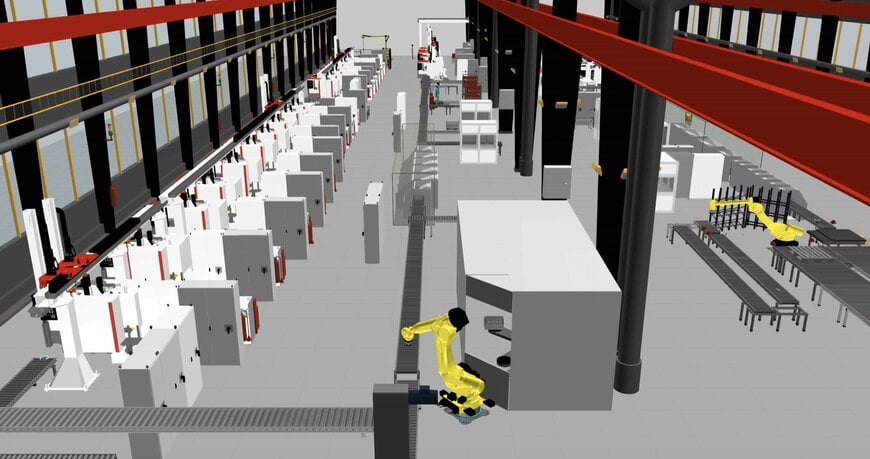
Application Area: 3D Manufacturing Simulation and Digital Factory Planning
Industry Sector: Automotive Powertrain Manufacturing
Automotive engine manufacturing requires high-precision synchronization across automated work cells, robotics, and material handling systems. At Kia Slovakia, the Manufacturing Engineering Engine Department historically relied on static two-dimensional layout drawings, engineering calculations, and spreadsheet models to plan assembly infrastructure. These legacy planning tools limited visibility into multi-machine kinematic interactions, complicated dynamic cycle-time verification, and increased the risk of overlooking product conveyance conflicts prior to physical installation on the plant floor.
Kinematic Simulation and Dynamic Bottleneck Analysis
To eliminate planning uncertainties, engineering teams deployed Visual Components 3D simulation software, leveraging its standardized component library to model production concepts dynamically. The software platform models physical kinematics, discrete material flow, signal exchanges, and robotic reachability within a synchronized virtual environment.
Replacing manual spreadsheet calculations with dynamic simulation models enables automotive engineers to identify throughput constraints and buffer starve-and-block conditions before deploying machinery. Simulation runs evaluate how process variations propagate across adjacent stations, allowing planners to optimize production layout concepts, adjust robotic trajectories, and balance cycle times with precision.
Stakeholder Alignment and Cross-Department Communication
The transition to interactive 3D digital assets enhanced collaboration between technical specialists and corporate stakeholders. Complex automated workflows, formerly represented by static documentation, are rendered as clear visual models that accelerate engineering reviews and speed design approval processes across multi-disciplinary teams.
Foundation for Digital Twin Implementation
The simulation architecture establishes the computational framework for Kia Slovakia's enterprise digital factory roadmap. The engineering department utilizes validated operational cycle times to calibrate virtual lines, laying the groundwork to integrate real-time programmable logic controller (PLC) signals directly into hardware-in-the-loop digital twins. Furthermore, the virtual asset library supports downstream virtual reality operator training programs and remote commissioning workflows, reducing plant-floor ramp-up periods and safeguarding future line modernizations against costly mechanical redesigns.
Edited by Romila DSilva, Induportals Editor, with AI assistance.
www.visualcomponents.com
