
www.auto-innovations.net
21
'26
Written on Modified on
How EV Battery Anode Architecture Increases Energy Density and Range
Comparing dry-processed graphite, anode-free lithium metal, and silicon-carbon negative electrodes from Tesla, QuantumScape, and EVE Energy to boost range.
induportals-media-publishing.com
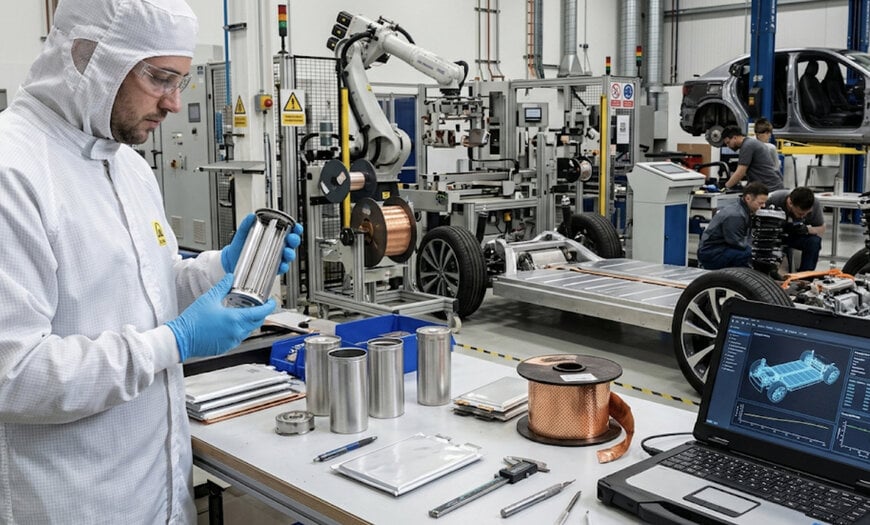
Next-generation anode architecture addresses a primary electrochemical bottleneck in electric vehicle battery manufacturing by replacing conventional graphite with higher-capacity negative electrode materials. While graphite is capped at a theoretical specific capacity of 372 mAh/g, silicon reaches roughly 3,579 mAh/g at room temperature (and up to 4,200 mAh/g theoretically), while pure lithium metal eliminates host weight entirely. Upgrading the negative electrode increases gravimetric and volumetric energy density, reduces pack mass, and accelerates lithium-ion diffusion during fast charging—while emerging dry-electrode and anode-free manufacturing processes aim to lower cell-level production costs per kilowatt-hour.
Current Technology Market Landscape
Commercial negative electrode engineering follows three parallel paths: dry-processed graphite with incremental silicon doping, silicon-carbon composite scaffolds, and anode-free lithium-metal architectures. Silicon-carbon hybrids currently deliver 600 to 1,500 mAh/g in production cells, whereas anode-free solid-state B-sample designs plate pure lithium directly onto the current collector during charging, reaching 844 Wh/L and 301 Wh/kg. Meanwhile, dry battery electrode coating removes toxic solvents and drying ovens from electrode fabrication, reducing factory footprint and energy consumption.
Core Market Challenge
Volumetric expansion remains the primary mechanical obstacle. Graphite swells by roughly 10% during lithiation, whereas pure silicon expands by 300% to 400%, causing particle fracture, unstable solid electrolyte interphase growth, and shortened cycle life averaging 500 to 1,500 cycles compared with 2,000 to 3,000 for graphite. Anode-free lithium-metal cells face dendrite penetration and require precise stack pressure management. Additionally, while dry-electrode and anode-free processes promise long-term savings, current drop-in silicon-based anodes add $10 to $15 per kWh in material costs over standard graphite.
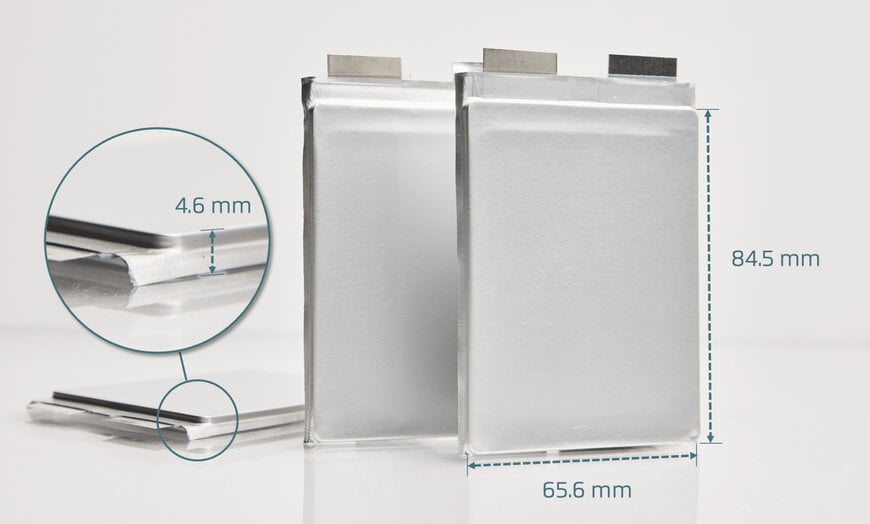
Photo Credit: Quantum Space
Existing Technology Solutions
Tesla employs a dry battery electrode process on its 4680 cylindrical cell anodes—expanding to full dry-electrode production for both anode and cathode in early 2026. Its pure-graphite 4680 cells progressed from roughly 240–244 Wh/kg in Gen 1 to 268–272 Wh/kg in the Gen 2 "Cybercell," with silicon-carbon blends on its roadmap to further improve cold-weather charging and range.
QuantumScape removes the anode host material altogether in its QSE-5 solid-state B-sample cell, pairing a ceramic separator with FlexFrame packaging to achieve 844 Wh/L, 301 Wh/kg, and 10% to 80% charging in 12.2 minutes at less than 3.4 atm of pressure.
EVE Energy pursues two distinct tracks: an all-solid-state pouch cell (Generation 1.0) using low-expansion, carbon-coated silicon-carbon composite anodes targeting 350 Wh/kg, 800 Wh/L, and over 2,000 cycles at 45 °C (operating under 20 MPa of stack pressure), alongside conventional liquid-electrolyte 46-series cylindrical cells engineered for external steel-can dimensional stability.
Actual Implementation on the Ground
Tesla introduced dry-processed anodes in 4680 cells for the Model Y in 2022 and scaled output past 100 million cumulative cells by September 2024 to supply the Cybertruck, which reached roughly 72,700 cumulative U.S. sales through October 2026 according to independent registration tracking.
QuantumScape and Volkswagen Group subsidiary PowerCo showcased anode-free QSE-5 B-sample cells outside the laboratory in September 2025, demonstrating a modified Ducati V21L electric motorcycle on stage at IAA Mobility in Munich as a sneak preview ahead of 2026 field testing and PowerCo's targeted automotive start-of-production around 2029.
EVE Energy scaled mass production of its externally "zero-expansion" 46-series cylindrical cells, surpassing 60,000 vehicle installations by May 2025 ahead of BMW Neue Klasse iX3 deployment, while targeting 2026 for the initial launch of its 350 Wh/kg solid-state pouch cell.
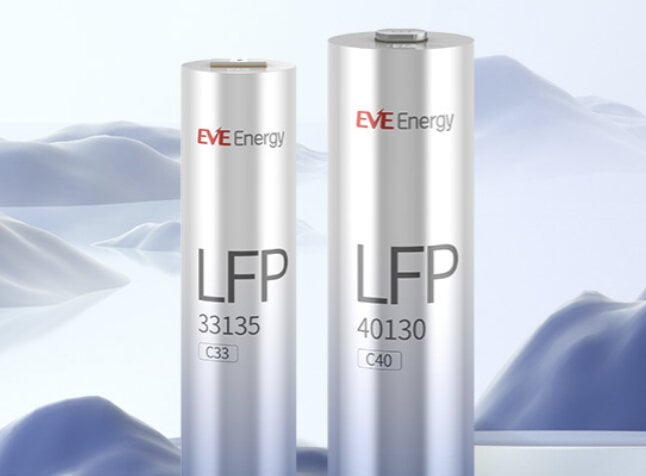
Photo Credit: EVE Energy
Summary and Strategic Future Outlook
Next-generation negative electrode engineering is dividing the automotive sector between drop-in silicon-carbon upgrades and long-term anode-free solid-state platforms. Over the coming decade, dry-electrode manufacturing will lower production expenses, while nanostructured carbon matrices and ceramic separators continue to narrow the cycle-life gap against conventional graphite as automakers scale gigawatt-hour capacity.
Edited by Maria Brueva, Induportals editor – adapted by AI.
www.auto-innovations.net
