
www.auto-innovations.net
13
'25
Written on Modified on
Semi-Solid Batteries Accelerate Electric Vehicle Industrialization
Segula Technologies analyzes semi-solid battery systems as an intermediate energy storage solution that improves range, charging speed and safety while remaining compatible with existing automotive production lines.
www.segulatechnologies.com
Semi-solid batteries in the context of automotive electrification
Automotive electrification strategies increasingly focus on reducing lifecycle emissions while maintaining vehicle performance and cost efficiency. Battery technology remains a critical limiting factor. While fully solid-state batteries are widely considered a long-term objective due to their potential energy density and safety advantages, semi-solid batteries have emerged as an intermediate technology that can be industrialized within current manufacturing constraints.
Semi-solid batteries have entered series production in China and are planned for introduction in European electric vehicle platforms. Their deployment reflects a pragmatic approach to improving energy storage performance without waiting for full industrial maturity of solid-state manufacturing processes.
Operating principle and cell architecture
Conventional lithium-ion batteries rely on a liquid electrolyte to transport lithium ions between the anode and cathode. This architecture is well established and scalable, but it constrains achievable energy density and introduces thermal management challenges.
Fully solid-state batteries replace the liquid electrolyte with a solid material, enabling higher theoretical energy density and improved thermal stability. However, this approach requires new materials, redesigned cell structures and fundamentally different production processes.
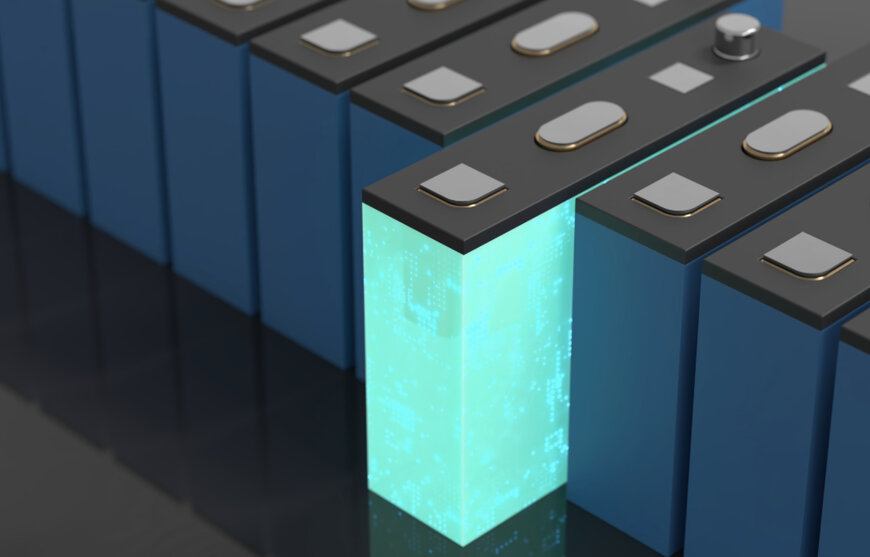
Semi-solid batteries combine solid and liquid electrolyte components within the same cell. This hybrid architecture increases active material density while retaining sufficient ionic conductivity. Because the electrolyte system remains partially liquid, existing lithium-ion production lines can be adapted rather than replaced, reducing industrial risk and investment requirements.
Performance metrics and material composition
Measured performance data indicates that semi-solid battery systems can deliver driving ranges of up to 800 kilometres under the European WLTP cycle, compared with approximately 350 to 450 kilometres for many current lithium-ion battery packs. Fast-charging capability is also improved, with reported full-charge times of around 12 minutes under high-power charging conditions.
These performance gains are enabled by revised electrode chemistries, typically based on nickel and manganese with minimal cobalt content. The reduced cobalt share increases material sustainability and allows higher energy storage within a fixed cell volume. The lower proportion of liquid electrolyte further contributes to improved thermal stability and reduced fire risk.
Industrial scalability and manufacturing implications
A defining characteristic of semi-solid batteries is their compatibility with existing lithium-ion manufacturing infrastructure. Cell assembly, coating and formation processes require adjustment but not complete replacement. This enables faster scale-up compared with fully solid-state batteries, which require new equipment and production methodologies.
From an industrial perspective, this compatibility reduces capital expenditure, shortens development timelines and allows manufacturers to introduce higher-performance batteries within established supply chains. As a result, electric vehicle models equipped with semi-solid batteries have already reached commercial availability in selected markets.
Role within the evolving battery ecosystem
Semi-solid batteries are positioned as a transitional technology rather than a final solution. Their adoption allows manufacturers to improve vehicle range, charging speed and safety while accumulating experience with solid electrolyte materials and hybrid cell architectures.
Over the medium term, the electric vehicle battery landscape is expected to include multiple complementary technologies. Solid-state lithium metal batteries are likely to address premium vehicle segments requiring maximum energy density. LFP and LMFP chemistries are expected to remain central to high-volume passenger vehicles due to their cost and durability characteristics. Sodium-ion batteries are anticipated for smaller vehicles where range requirements are lower and cost sensitivity is higher.
Technical significance for electric vehicle deployment
By combining measurable performance improvements with industrial feasibility, semi-solid batteries address several constraints affecting electric vehicle adoption. Their introduction strengthens the electric vehicle value chain while supporting a gradual transition toward fully solid-state energy storage systems.
Within the broader automotive data ecosystem, semi-solid batteries illustrate how incremental technological advances can deliver immediate operational benefits while preparing manufacturers for more disruptive innovations at a later stage.
www.segulatechnologies.com
