
www.auto-innovations.net
30
'25
Written on Modified on
Electric Drive Units in Battery Vehicles Explained
General Motors applies in-house propulsion expertise to integrate motors, inverters and gearsets into compact electric drive units for efficient battery-electric vehicles.
www.gm.com
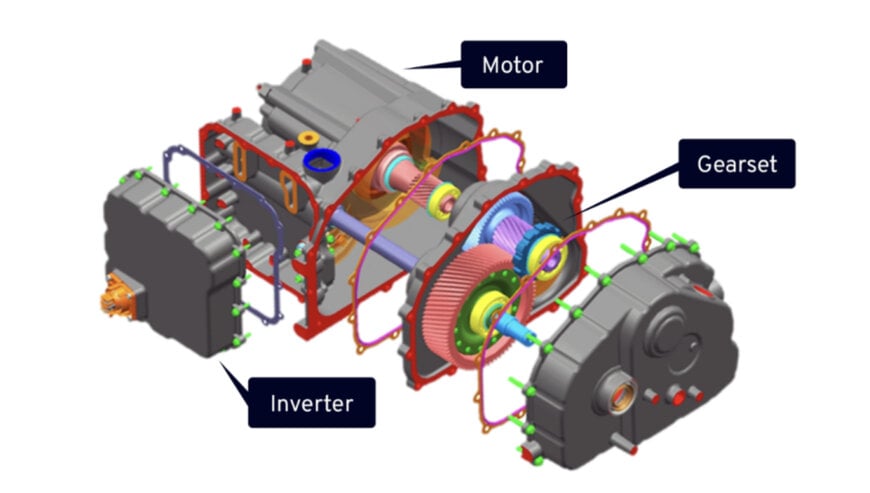
General Motors equips all of its battery-electric vehicles with integrated electric drive units that convert stored electrical energy into motion through a coordinated interaction of motor, inverter and gearset. This architecture underpins the company’s EV performance, efficiency and scalability strategy.
Electric drive units as the core of EV propulsion
In a battery-electric vehicle, propulsion is handled by an electric drive unit that combines three main components: an inverter, an electric motor and a gearset. Together, these elements transform direct current (DC) energy from the battery into controlled mechanical torque at the wheels. General Motors designs most of these drive units in-house, drawing on more than a century of propulsion system development to optimize integration, efficiency and reliability.
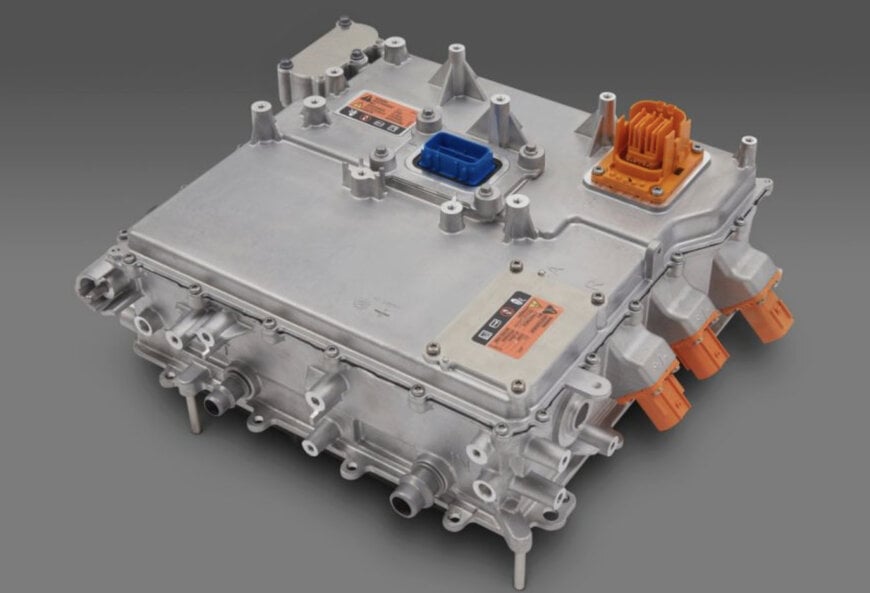
The inverter: managing energy conversion
The inverter performs the fundamental electrical conversion required for motion. While the battery stores energy as DC, the electric motor requires alternating current (AC) to generate rotation. The inverter converts DC into AC by rapidly switching power electronics thousands of times per second. This controlled switching delivers precisely timed current pulses to the motor’s stator, creating a rotating magnetic field that drives the rotor. In technical terms, the inverter regulates both frequency and amplitude of the current, enabling fine control of motor speed and torque across a wide operating range.
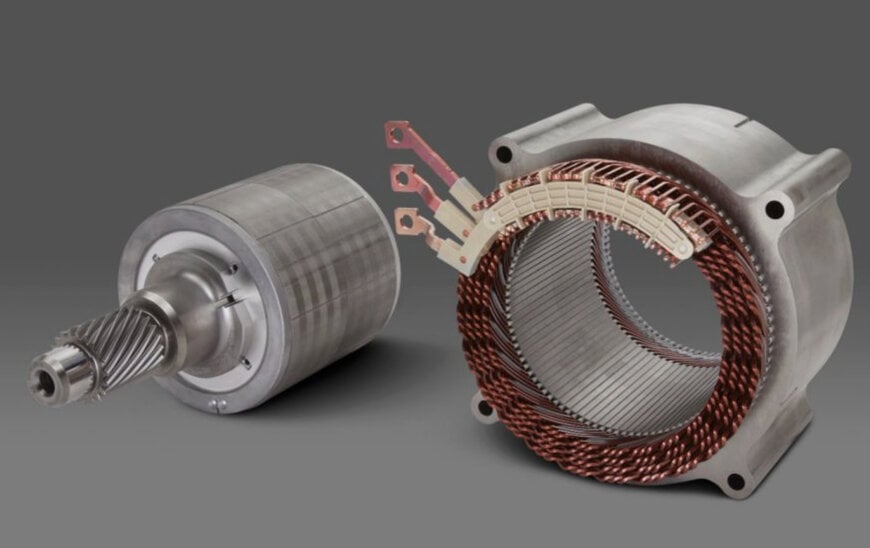
The motor: converting electricity into torque
The electric motor is the component that physically generates motion. Most GM drive units use permanent-magnet motors, which rely on magnetic interaction between the rotor and stator. The rotor contains permanent magnets mounted on a shaft, while the stator consists of copper windings arranged around a stationary core. When alternating current flows through the stator windings, it produces a rotating magnetic field. The rotor magnets follow this field, causing the shaft to rotate and produce torque that can be transmitted to the wheels.
From a mechanical perspective, the motor is comparatively simple, with the rotor as the primary moving part. This simplicity contributes to lower mechanical losses and reduced maintenance requirements compared with internal-combustion powertrains.
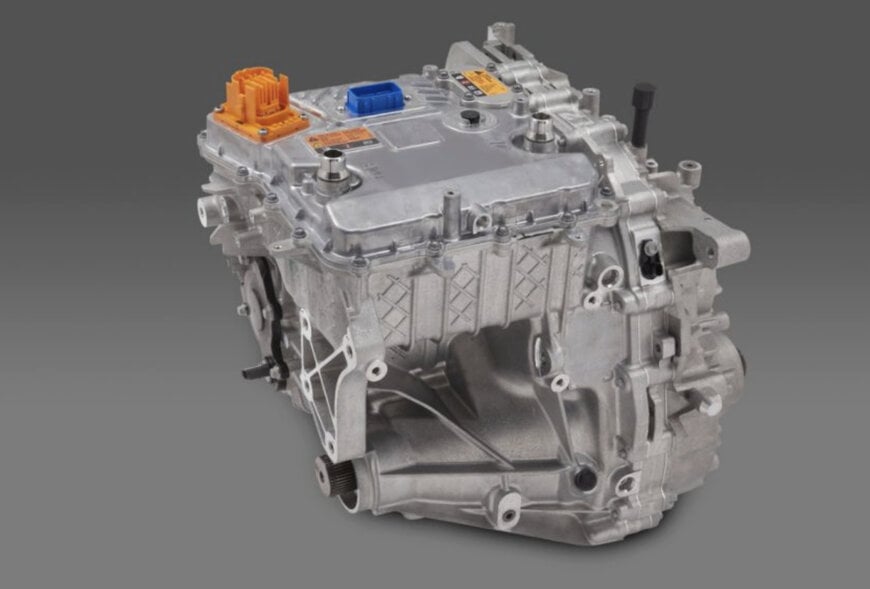
The gearset: transmitting power to the wheels
The gearset connects the rotating motor shaft to the vehicle’s axles. Electric motors operate efficiently across a broad speed range, which allows most EVs to use a single-speed reduction gear rather than a multi-gear transmission. The gearset reduces motor speed while increasing torque to levels suitable for driving the wheels.
An additional functional advantage is bidirectional operation. Because electric motors can rotate in either direction, reverse motion does not require a dedicated mechanical gear. Instead, the vehicle control system commands the inverter to reverse the motor’s rotation direction, simplifying the drivetrain layout.
System simplicity and software complexity
At a component level, electric drive units contain relatively few mechanical parts compared with conventional powertrains. However, their performance depends heavily on advanced power electronics and control software. Algorithms manage current flow, torque delivery, efficiency optimization and regenerative braking in real time. This combination of mechanical simplicity and software sophistication enables smooth, low-noise operation and rapid response, characteristics that define modern EV driving behavior.
Technical positioning
By integrating inverter, motor and gearset into a compact drive unit, General Motors standardizes a modular propulsion architecture that can be scaled across different vehicle platforms. This approach supports efficiency gains, manufacturing consistency and performance tuning across a broad EV portfolio, while providing the foundation for continued software-driven improvements in electric propulsion systems.
www.gm.com
