
www.auto-innovations.net
11
'26
Written on Modified on
BANF and Silicon Labs Introduce Intelligent Tire Monitoring System
Bluetooth Low Energy SoC and wireless power technology enable high-frequency tire data processing for autonomous vehicles and connected fleet monitoring.
www.silabs.com
Intelligent sensing transforms tires into real-time data sources
Vehicle safety, efficiency, and predictive maintenance increasingly rely on real-time sensor data across automotive systems. BANF, a developer of intelligent tire technologies, and Silicon Labs have introduced an advanced tire monitoring solution that digitizes tire performance data using embedded sensors and low-power wireless connectivity.
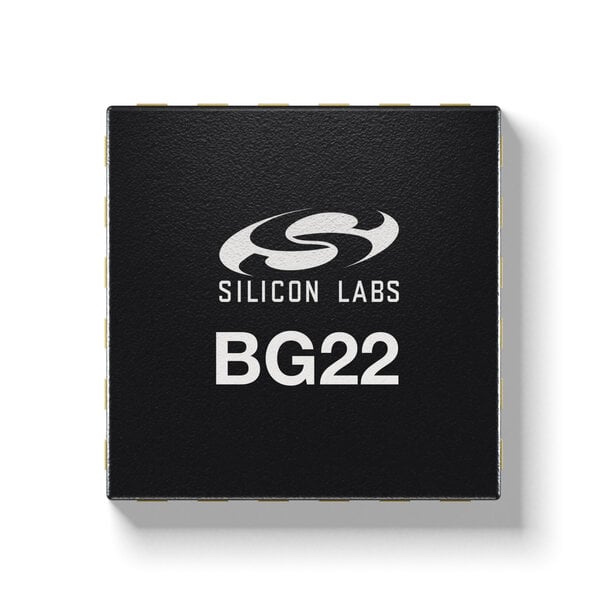
The system integrates Silicon Labs’ BG22 Bluetooth Low Energy system-on-chip (SoC) with BANF’s in-tire sensing platform to capture and process tire data at sampling rates up to 4 kHz. Designed for autonomous vehicles and connected fleet operations, the system enables real-time monitoring of tire conditions such as load, friction, and mechanical stress.
In-tire sensor measures multiple parameters at high sampling rates
Traditional Tire Pressure Monitoring Systems (TPMS) typically detect only significant pressure loss, limiting their ability to identify early-stage performance issues. BANF’s solution expands tire monitoring by embedding a sensor module, called iSensor, directly inside the tire.
The device measures multiple parameters simultaneously, including:
- Three-axis acceleration
- Pressure
- Temperature
- Tread depth
Operating at 4 kHz sampling frequency, the sensor collects detailed motion and structural data from the tire. Instead of transmitting raw data, the system processes the information locally inside the tire, extracting key indicators such as wheel-nut loosening, tire slip events, or friction reduction before transmitting concise alerts to the vehicle.
This edge processing approach reduces wireless communication load while allowing vehicle systems to respond more quickly to potential safety or performance issues.
Low-power Bluetooth connectivity supports harsh tire environments
Wireless communication inside a tire presents technical challenges because steel reinforcement and thick rubber layers can block or attenuate radio signals. The system uses Silicon Labs’ BG22 Bluetooth LE SoC, which is optimized for ultra-low-power operation and reliable RF communication in constrained environments.
The SoC also integrates Secure Vault security technology, which protects transmitted tire data from tampering or spoofing. Such protection is important for connected and autonomous vehicles where sensor data may influence safety-critical systems such as stability control or automated driving algorithms.
Wireless power transfer enables battery-free sensing
Power supply has historically limited advanced in-tire sensing systems. Batteries degrade rapidly due to heat, centrifugal forces, and continuous mechanical stress inside rotating tires.
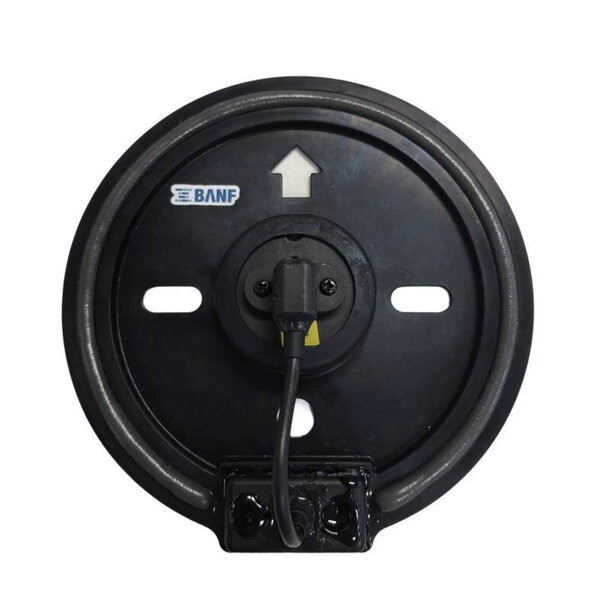
BANF addresses this constraint using a wireless power transfer architecture based on magnetic resonance. A device called the Smart Profiler, mounted on the vehicle’s mudguard or fender, transmits energy wirelessly to the in-tire sensor.
This battery-free power system enables continuous operation and supports the high sampling frequency required for real-time monitoring without relying on replaceable batteries or wired connections.
Data supports autonomous driving and fleet optimization
By converting tires into connected sensing nodes, the system provides data that can support a range of vehicle functions, including chassis control, traction management, and predictive maintenance. In autonomous or semi-autonomous vehicles, where human drivers cannot detect subtle traction changes, this information can improve system awareness of road conditions and tire performance.
Fleet operators may also use the collected data to improve vehicle maintenance scheduling, route optimization, and operational efficiency by identifying tire wear patterns and performance changes earlier.
Through the integration of advanced sensing, wireless connectivity, and energy transfer technologies, BANF and Silicon Labs demonstrate how traditionally mechanical components such as tires can be integrated into data-driven vehicle architectures.
www.silabs.com
Edited by Industrial Journalist, Natania Lyngdoh.
Powered by AI.
This edge processing approach reduces wireless communication load while allowing vehicle systems to respond more quickly to potential safety or performance issues.
Low-power Bluetooth connectivity supports harsh tire environments
Wireless communication inside a tire presents technical challenges because steel reinforcement and thick rubber layers can block or attenuate radio signals. The system uses Silicon Labs’ BG22 Bluetooth LE SoC, which is optimized for ultra-low-power operation and reliable RF communication in constrained environments.
The SoC also integrates Secure Vault security technology, which protects transmitted tire data from tampering or spoofing. Such protection is important for connected and autonomous vehicles where sensor data may influence safety-critical systems such as stability control or automated driving algorithms.
Wireless power transfer enables battery-free sensing
Power supply has historically limited advanced in-tire sensing systems. Batteries degrade rapidly due to heat, centrifugal forces, and continuous mechanical stress inside rotating tires.
BANF addresses this constraint using a wireless power transfer architecture based on magnetic resonance. A device called the Smart Profiler, mounted on the vehicle’s mudguard or fender, transmits energy wirelessly to the in-tire sensor.
This battery-free power system enables continuous operation and supports the high sampling frequency required for real-time monitoring without relying on replaceable batteries or wired connections.
Data supports autonomous driving and fleet optimization
By converting tires into connected sensing nodes, the system provides data that can support a range of vehicle functions, including chassis control, traction management, and predictive maintenance. In autonomous or semi-autonomous vehicles, where human drivers cannot detect subtle traction changes, this information can improve system awareness of road conditions and tire performance.
Fleet operators may also use the collected data to improve vehicle maintenance scheduling, route optimization, and operational efficiency by identifying tire wear patterns and performance changes earlier.
Through the integration of advanced sensing, wireless connectivity, and energy transfer technologies, BANF and Silicon Labs demonstrate how traditionally mechanical components such as tires can be integrated into data-driven vehicle architectures.
www.silabs.com
Edited by Industrial Journalist, Natania Lyngdoh.
Powered by AI.
