
www.auto-innovations.net
18
'26
Written on Modified on
Electric Commercial Vehicles for Municipal Waste Logistics
Volvo Trucks presented new battery-electric vehicles and technologies at IFAT 2026 in Munich to support low-emission transport in urban and regional applications.
www.volvotrucks.com
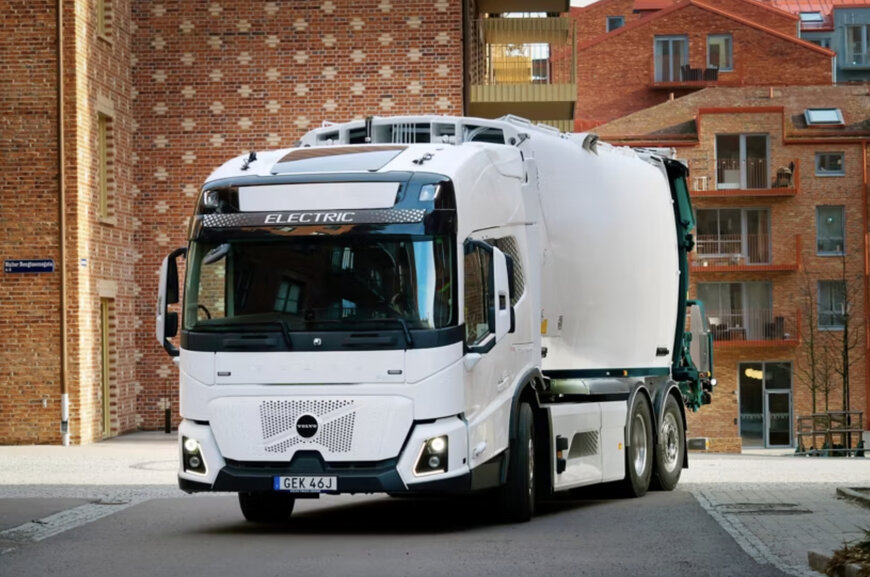
At IFAT 2026, held from May 4 to 7 in Munich, Volvo Trucks showcased several battery-electric commercial vehicles designed for municipal waste management, regional transport, and urban operations. The focus was on new vehicle generations and technical developments supporting decarbonization in the transport sector.
Electrification for Municipal Applications
The exhibited vehicles address requirements in waste collection and recycling logistics, where low emissions, reduced noise, and flexible duty cycles are increasingly important. Volvo Trucks presented two electric trucks and one electric wheel loader, positioning them within a broader strategy to reduce CO₂ emissions in commercial transport.
Together with Volvo Construction Equipment and Volvo Penta, the company presented solutions for low-emission operations across the value chain under the theme “Together Towards Zero.”
New Vehicle Generations and Technology Developments
A key focus was the introduction of new battery-electric truck models for municipal use. These include a low-entry vehicle designed for waste collection, optimized for driver ergonomics and frequent stop-and-go cycles. This was complemented by a 6x2 electric hook-lift truck equipped with a new drivetrain technology, making its first presentation in Germany.
The ongoing development of electric commercial vehicles aims to expand their application range and enable economically viable operation for both small and large fleets. This supports operators within a digital supply chain that requires flexible and scalable transport solutions.
Technical Specifications for Operational Use
The low-entry waste collection vehicle features a battery capacity of 360 kWh (NCA technology) and a drivetrain output of 330 kW. Charging is possible at up to 250 kW (DC) or 43 kW (AC). The electric driveline combines a central drive unit with two electric motors and an automated 12-speed transmission. A 600 V DC interface allows integration of auxiliary equipment such as body systems.
The new-generation electric hook-lift truck is equipped with a 540 kWh battery (NCA) and is designed for applications with higher energy demand. Both vehicles are configured for specific body types, including waste collection systems and hook-lift solutions.
Integration into Operations and Infrastructure
In addition to the vehicles, Volvo Trucks presented services, financing models, and operational strategies for electric fleets. The focus was on practical deployment, including vehicle and drivetrain selection, as well as planning of charging infrastructure and operational concepts.
The presented solutions aim to support the transition to low-emission transport systems in municipal and regional environments through technically and economically viable approaches.
Edited by Maria Brueva, Induportals editor – adapted by AI.
www.volvotrucks.com
