
www.auto-innovations.net
19
'26
Written on Modified on
Winter Tire Engineering for High-Performance European Driving Ecosystems
Nokian Tyres introduces the Snowproof 3P to provide high-speed stability and specialized traction control for passenger cars and sport utility vehicles in variable winter climates.
www.nokiantyres.com
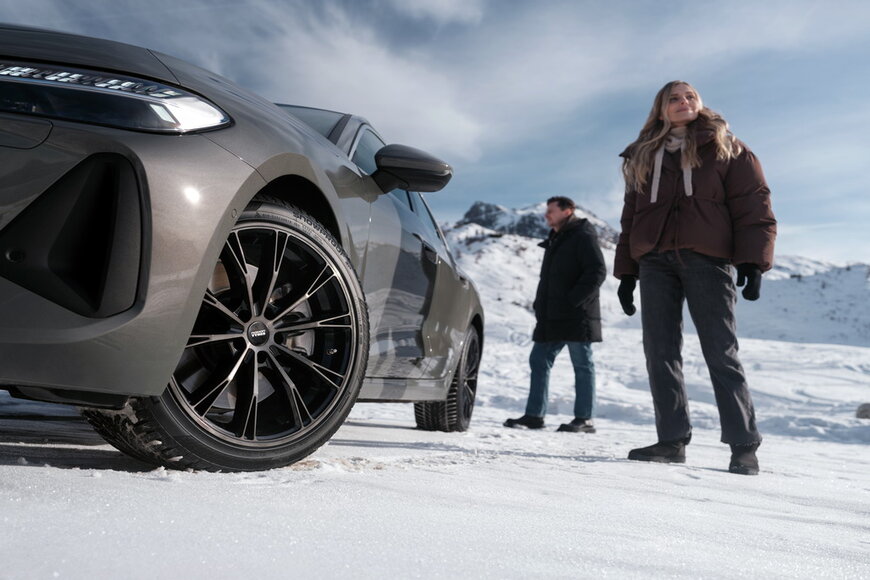
The Nokian Tyres Snowproof 3P is a premium winter tire engineered to balance high-performance handling with the specific traction requirements of Central European winter climates. Designed for sedans, SUVs, and electric vehicles (EVs), the tire utilizes specialized rubber compounds and structural reinforcements to maintain predictability across snow, slush, and dry pavement at highway speeds.
Technical Architecture of the Triple Zone Tread
The operational efficiency of the Snowproof 3P is derived from the Alpine Performance Concept 3.0, which employs a Triple Zone Tread pattern to manage varying surface conditions. This configuration segments the contact patch into three functional areas:
- Arctic Zone: Utilizes two distinct types of 3D-locking sipes located on the shoulder and middle blocks. These mechanical biters increase edge density to improve longitudinal traction during braking and lateral stability during cornering on packed snow.
- Aqua Zone: Incorporates a "Blade Groove" architecture. By increasing the total groove volume, the design facilitates higher water displacement rates, directly reducing the risk of hydrodynamic skinning (aquaplaning).
- Performance Zone: Features optimized tread geometry designed to minimize block deformation. This stiffness is critical for maintaining directional stability and steering precision during high-speed maneuvers on dry or cold asphalt.
Material Composition and Sustainability Standards
The chemical profile of the tire marks a shift toward sustainable sourcing within the digital supply chain. Approximately 40% of the raw materials used in the Snowproof 3P are renewable, recycled, or ISCC PLUS certified.
The Alpine Grip Compound integrates a high proportion of silica combined with a new generation of functionalized polymers and renewable resins. This high silica loading ensures the elastomer remains flexible at temperatures below 7°C, which is essential for maintaining a consistent friction coefficient on wet surfaces. Furthermore, the compound’s molecular structure is optimized to reduce rolling resistance, which contributes to increased fuel efficiency and extended battery range for electric platforms.
Structural Reinforcement and Acoustic Management
To address the mechanical stresses associated with heavy SUVs and high-torque EVs, the tire incorporates Aramid Strong Sidewalls. This technology embeds synthetic aramid fibers—materials used in aerospace and ballistic applications—into the sidewall structure. These fibers increase the tire’s resistance to impact-induced ruptures caused by potholes or curbing.
For electric vehicle applications, the tire features SilentDrive technology. This consists of a specialized layer of acoustic foam bonded to the inner liner of the tire. The foam is calibrated to absorb cavity resonance and dampen noise frequencies that are typically more audible in the absence of internal combustion engine noise.
Validation and Production Logistics
The Snowproof 3P underwent multi-environment validation at the Ivalo Test Center in Finland for sub-zero performance and the Hakka Ring in Spain for high-speed endurance. The tire has been awarded the TÜV SÜD Tire Mark, an independent certification confirming that the product meets specific benchmarks for safety and quality relative to market competitors.
Production is primarily centered at the manufacturing facility in Oradea, Romania—the industry’s first tire plant to operate with zero CO2 emissions across Scope 1 and 2. The initial release includes 50 product iterations ranging from 17 to 21 inches, with the majority carrying an XL (Extra Load) rating to support the increased mass of modern hybrid and battery-electric vehicle architectures.
Edited by Evgeny Churilov, Induportals editor - Adapted by AI.
www.company.nokiantyres.com
The chemical profile of the tire marks a shift toward sustainable sourcing within the digital supply chain. Approximately 40% of the raw materials used in the Snowproof 3P are renewable, recycled, or ISCC PLUS certified.
The Alpine Grip Compound integrates a high proportion of silica combined with a new generation of functionalized polymers and renewable resins. This high silica loading ensures the elastomer remains flexible at temperatures below 7°C, which is essential for maintaining a consistent friction coefficient on wet surfaces. Furthermore, the compound’s molecular structure is optimized to reduce rolling resistance, which contributes to increased fuel efficiency and extended battery range for electric platforms.
Structural Reinforcement and Acoustic Management
To address the mechanical stresses associated with heavy SUVs and high-torque EVs, the tire incorporates Aramid Strong Sidewalls. This technology embeds synthetic aramid fibers—materials used in aerospace and ballistic applications—into the sidewall structure. These fibers increase the tire’s resistance to impact-induced ruptures caused by potholes or curbing.
For electric vehicle applications, the tire features SilentDrive technology. This consists of a specialized layer of acoustic foam bonded to the inner liner of the tire. The foam is calibrated to absorb cavity resonance and dampen noise frequencies that are typically more audible in the absence of internal combustion engine noise.
Validation and Production Logistics
The Snowproof 3P underwent multi-environment validation at the Ivalo Test Center in Finland for sub-zero performance and the Hakka Ring in Spain for high-speed endurance. The tire has been awarded the TÜV SÜD Tire Mark, an independent certification confirming that the product meets specific benchmarks for safety and quality relative to market competitors.
Production is primarily centered at the manufacturing facility in Oradea, Romania—the industry’s first tire plant to operate with zero CO2 emissions across Scope 1 and 2. The initial release includes 50 product iterations ranging from 17 to 21 inches, with the majority carrying an XL (Extra Load) rating to support the increased mass of modern hybrid and battery-electric vehicle architectures.
Edited by Evgeny Churilov, Induportals editor - Adapted by AI.
www.company.nokiantyres.com
