
www.auto-innovations.net
15
'26
Written on Modified on
Scalable Magnetic Position Sensing for Rare Earth Material Reduction
Through its smart sensor portfolio, ams OSRAM provides Hall-based and inductive sensing architectures to minimize dependence on neodymium and samarium cobalt in automotive systems.
ams-osram.com
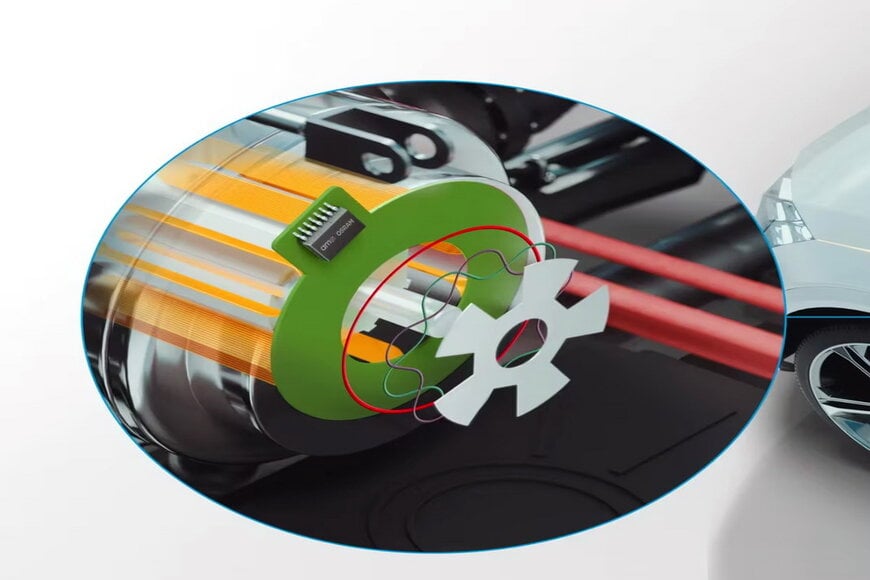
The transition toward electrified powertrains and drive-by-wire architectures necessitates precise position, speed, and torque sensing while managing the supply chain volatility of rare earth elements. High-performance magnetic sensors traditionally utilize neodymium-iron-boron magnets to ensure signal integrity; however, advancements in differential sensing and signal processing now allow for the integration of rare earth-free ferrite magnets in automotive-grade applications.
Technical Challenges of Ferrite Integration
While ferrite magnets offer higher corrosion resistance and thermal stability compared to rare earth alternatives, they produce significantly weaker magnetic flux densities. Transitioning to these materials requires a high degree of sensor sensitivity to maintain a sufficient signal-to-noise ratio. Simultaneously, the automotive data ecosystem is increasingly influenced by high-voltage systems. Electric motors generating currents exceeding 100 amperes produce substantial electromagnetic stray fields that can distort sensor readings.
To maintain functional safety and reliability, sensors must decouple the useful signal from the ambient noise. ams OSRAM utilizes differential Hall-based sensing architectures to mitigate these effects. By measuring the magnetic field at multiple points and calculating the difference, the sensor cancels out homogenous stray fields while capturing the localized gradient produced by the target magnet.
Advanced Signal Processing and Stray Field Immunity
The ams OSRAM smart sensor approach compensates for the lower magnetic field strengths of ferrite magnets through integrated signal conditioning. These sensors provide analog or digital outputs via standard communication protocols, ensuring compatibility with existing Electronic Control Units (ECUs). This methodology allows for ultra-compact designs in chassis, steering, and braking systems where space constraints previously dictated the use of high-power neodymium magnets.
For applications requiring complete elimination of magnetic materials, inductive position sensing technologies are utilized. These systems operate on transformer principles, using metallic targets rather than magnets, which provides inherent immunity to DC stray fields and high-speed rotation capabilities suitable for motor position sensing.
Design Optimization and the Digital Supply Chain
Managing the digital supply chain for automotive components requires early-stage validation of material trade-offs. The ams OSRAM POS Simulator Tool enables engineers to model magnetic field interactions and compare the performance of ferrite-based versus rare-earth-based configurations before hardware prototyping. This simulation environment quantifies the impact of air gaps, temperature fluctuations, and mechanical tolerances on sensor accuracy.
By utilizing these simulation tools alongside differential Hall and inductive technologies, manufacturers can achieve the high-precision requirements of ISO 26262 functional safety standards while reducing reliance on geographically concentrated rare earth supplies. This dual-track technology portfolio supports the scalability of electric vehicle production by providing resilient, interference-immune sensing solutions across a wide range of magnetic flux densities.
Edited by Evgeny Churilov, Induportals Media - Adapted by AI.
ams-osram.com
