
www.auto-innovations.net
29
'26
Written on Modified on
Video Diagnostics IC for Automotive AR HUD Safety
Addressing augmented reality distraction risks, Renesas introduces the RAA278831 video diagnostics IC to ensure functional safety and compliance in automotive head-up displays.
www.renesas.com
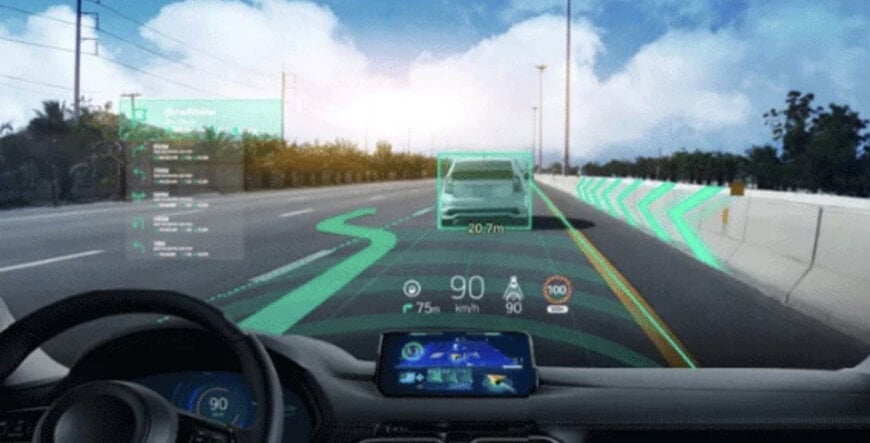
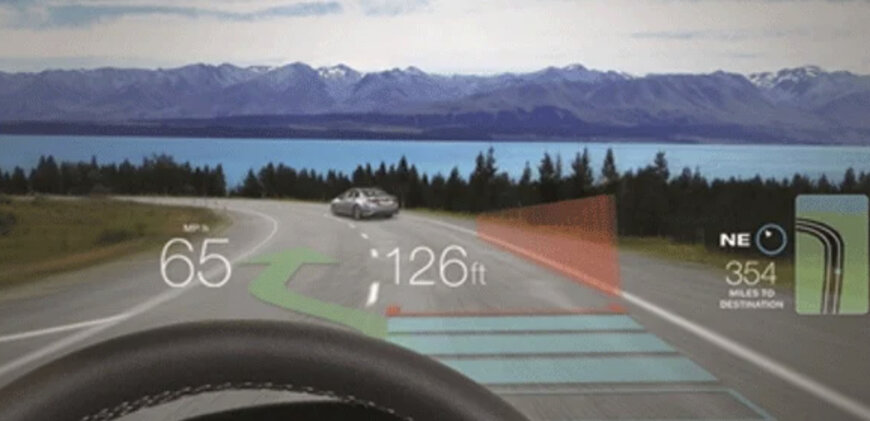
Modern automotive cockpit designs increasingly rely on head-up display systems to project navigation data, vehicle telemetry, and critical alerts directly into the driver's line of sight. As these display systems evolve into sophisticated augmented reality platforms, they project dynamic graphical content over a large portion of the windshield. These systems map directional arrows, boundary boxes, and speed indicators onto physical objects and the road ahead. While this continuous real-time guidance removes the need for operators to look away from the road, the automotive industry faces significant functional safety challenges regarding potential visual interference. Displaying incorrect spatial information, flickering graphics, or projecting solid colors across the windshield can severely obstruct physical visibility and induce cognitive distraction for the vehicle operator.
Mitigating Augmented Reality Distraction Risks
To address these critical visual interference risks, automotive manufacturers and regulatory bodies are establishing rigorous functional safety requirements for display architectures. United Nations Economic Commission for Europe Regulation 105.2 places increased scrutiny on how digital information integrates into the driver's forward field of view, specifically targeting visibility obstruction and the safe integration of augmented reality content. Consequently, tier-one suppliers are actively working to implement ISO 26262 ASIL B diagnostic monitoring capabilities within head-up display modules to prevent hazardous graphical failures from reaching the driver's field of vision.
RAA278831 System Architecture And Operating Principles
Responding to these stringent diagnostic requirements, Renesas developed the RAA278831 video display and diagnostics IC. This specialized video processor provides system engineers with a cost-effective, hardware-level mechanism to monitor both the incoming video signal and the rendered graphical content within the display pipeline. Utilizing multiple diagnostic and measurement engines, the processor actively scans for visual anomalies such as screen flickering, graphic flashing, or the inadvertent projection of solid blocks of color that could obscure the physical roadway.
Functional Safety And System Integration
When the RAA278831 detects a visual anomaly or signal failure, the system architecture allows for automated mitigation. The integrated circuit can rapidly transmit an alert to the primary graphics processing unit or execute independent corrective measures directly within the display hardware. Furthermore, the processor features an internal on-screen display capability designed to present warning messages and critical vehicle telemetry even if the primary input video source is corrupted or entirely lost. By embedding this autonomous diagnostic layer directly into the head-up display projection module, automotive manufacturers can achieve compliance with ASIL B functional safety standards without introducing significant computational overhead or validation complexity to the centralized vehicle software stack.
Additional Context
This section details technical specifications and competitive benchmarking not included in the original product announcement.
The transition from conventional head-up displays to augmented reality systems requires significantly higher rendering bandwidth and precise spatial alignment, making hardware-based diagnostic monitoring an essential architectural component. In the automotive semiconductor sector, achieving ISO 26262 ASIL B compliance for continuous display systems typically involves independent watchdog mechanisms and hardware-isolated warning layers. Technologies comparable to the Renesas solution include automotive display processors from Texas Instruments and NXP Semiconductors, which similarly integrate safety-monitoring features to verify frame integrity and signal transmission. Furthermore, the implementation of UNECE Regulation 105.2 is accelerating the industry-wide adoption of dedicated diagnostic integrated circuits, as software-only safety mechanisms are often deemed insufficient to guarantee real-time fault mitigation in critical visual display pipelines.
Edited by Maria Brueva, Induportals editor – adapted by AI.
www.renesas.com
