
www.auto-innovations.net
05
'26
Written on Modified on
Chassis components for aftermarket vehicle repairs
Bosch introduces control arms and tie rods to address mechanical wear in electric and conventional vehicles across independent workshop networks.
www.bosch.com
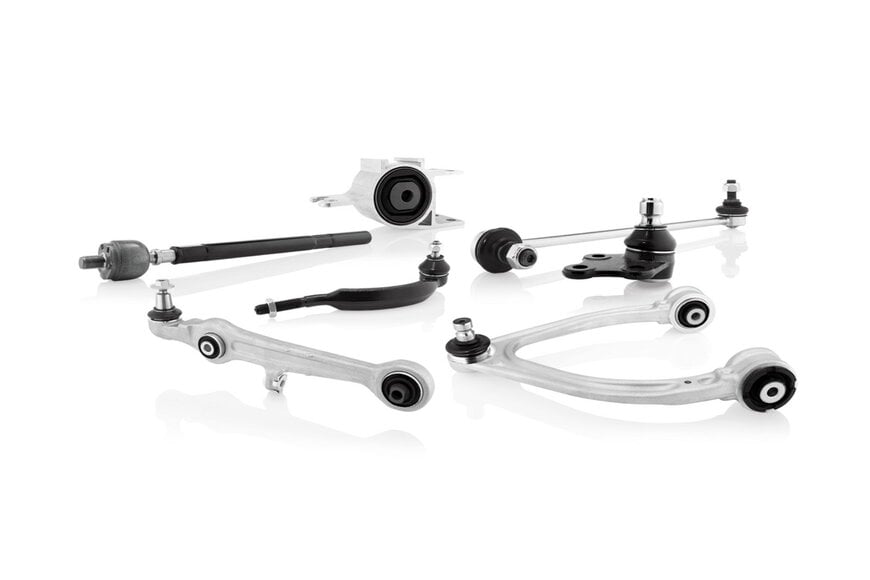
Bosch expands its automotive aftermarket portfolio by introducing chassis components designed for vehicle maintenance and repair. The offering includes structural elements critical to vehicle dynamics, targeted at independent workshops and wholesale distributors.
Industrial Integration and System Requirements
Suspension and steering systems undergo continuous stresses that directly affect operational safety. During periodic vehicle inspections, chassis defects represent one of the primary causes of roadworthiness test failures. The increased total curb weight and instantaneous torque typical of electric vehicles accelerate wear rates on ball joints and steering linkages, driving growing demand for targeted maintenance.
To address these kinematic stresses, Bosch applies original equipment engineering expertise developed across braking, steering, and vehicle dynamics control systems. Technical alignment with repair networks focuses on delivering replacement components compliant with strict dimensional tolerances and testing procedures exceeding baseline regulatory standards.
Technical Specifications and Component Architecture
The product program comprises control arms, stabilizer bars, and tie rods. Engineering specifications address diverse drivetrain and chassis layouts:
- Lightweight structural parts calibrated for the axial load demands of electrified platforms.
- Hydraulic bushings engineered for high-frequency vibration damping and acoustic isolation.
- Ball joints and silent blocks available as individual serviceable units, enabling selective replacement of friction-bearing components without swapping the complete control arm assembly.
Workshop Installation and Operational Efficiency
To streamline installation workflows and ensure bolt torquing meets factory specifications, each assembly is supplied complete with application-matched hardware, including nuts, bolts, and calibrated washers. This modular approach reduces vehicle downtime and maintains correct geometric alignment between subframe and wheel hub assemblies.
Spare part availability is backed by established regional supply chain networks to ensure consistent delivery scheduling. The ongoing range rollout covers structural mechanical requirements for high-mileage internal combustion fleets as well as dedicated battery-electric platforms.
Edited by Evgeny Churilov, Induportals Media - Adapted by AI.
www.bosch.com
To streamline installation workflows and ensure bolt torquing meets factory specifications, each assembly is supplied complete with application-matched hardware, including nuts, bolts, and calibrated washers. This modular approach reduces vehicle downtime and maintains correct geometric alignment between subframe and wheel hub assemblies.
Spare part availability is backed by established regional supply chain networks to ensure consistent delivery scheduling. The ongoing range rollout covers structural mechanical requirements for high-mileage internal combustion fleets as well as dedicated battery-electric platforms.
Edited by Evgeny Churilov, Induportals Media - Adapted by AI.
www.bosch.com
