
www.auto-innovations.net
13
'26
Written on Modified on
Vector adds FPGA-based electric motor models to CANoe MCU testing
New simulation models enable early signal-level validation of motor control units without real motors, supporting faster development of EV and actuator drive systems.
www.vector.com
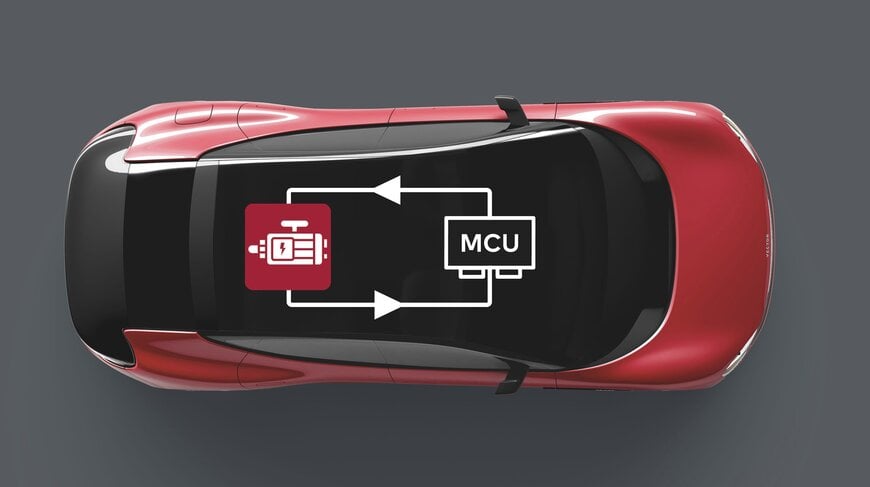
Vector has expanded its CANoe test environment with a simulation option that enables early validation of motor control units (MCUs) for electric motors without requiring physical motor hardware. With Release 19, the company introduced the CANoe Model Option Electric Motor, adding preconfigured motor simulation models intended for out-of-the-box use in MCU test setups.
Motor simulation targets early-stage MCU validation
The Model Option Electric Motor includes physical simulation models for multiple motor types used in industrial and automotive electrification, including permanent magnet synchronous motors (PMSM), brushless DC (BLDC) motors, induction motors, and conventional DC motors.
Instead of relying on a real motor and power electronics for initial testing, the simulation models close the control loop and provide realistic, consistent input signals to the control unit under test. Because the MCU interface operates at signal level, the setup avoids handling high currents and voltages, reducing complexity and risk in early development environments.
High-frequency PWM execution runs on Vector FPGA hardware
A core technical element of the option is how the motor model is executed. The simulation is driven by high-frequency pulse-width modulated (PWM) signals, and the model runs on the FPGA of the Vector Multi-IO module VT5838.
This approach supports realistic timing behavior for motor control validation while keeping the testing environment decoupled from high-power components. The setup is intended for test cases such as validating motor control behavior under typical operating conditions and performing fault injection through CANoe.
One-click deployment and parameter tuning for real motor matching
Vector positions the option for fast setup in day-to-day test workflows. Preconfigured simulation models can be loaded onto the FPGA module “with a single click” and used immediately, after which engineers can adjust parameters inside CANoe to better match the characteristics of the target motor.
For more advanced modeling needs, the package also includes open models via a Simulink library, allowing further customization. Vector notes that this can include adding electrical components such as sensors and inverters, enabling model tailoring for specific test requirements.
Use across actuators and traction motors, with DYNA4 vehicle validation support
The CANoe Model Option Electric Motor is designed for engineers developing or validating MCUs used both for actuator motors and traction motors. For system-level validation in a full vehicle context, the setup can also be extended using Vector DYNA4 through a virtual test drive configuration—supporting broader testing within an automotive data ecosystem and related digital supply chain development workflows.
By enabling control strategy optimization and early validation before real components are available, the new CANoe option is positioned to reduce development friction while supporting more consistent MCU testing of electric motor systems.
www.vector.com
Motor simulation targets early-stage MCU validation
The Model Option Electric Motor includes physical simulation models for multiple motor types used in industrial and automotive electrification, including permanent magnet synchronous motors (PMSM), brushless DC (BLDC) motors, induction motors, and conventional DC motors.
Instead of relying on a real motor and power electronics for initial testing, the simulation models close the control loop and provide realistic, consistent input signals to the control unit under test. Because the MCU interface operates at signal level, the setup avoids handling high currents and voltages, reducing complexity and risk in early development environments.
High-frequency PWM execution runs on Vector FPGA hardware
A core technical element of the option is how the motor model is executed. The simulation is driven by high-frequency pulse-width modulated (PWM) signals, and the model runs on the FPGA of the Vector Multi-IO module VT5838.
This approach supports realistic timing behavior for motor control validation while keeping the testing environment decoupled from high-power components. The setup is intended for test cases such as validating motor control behavior under typical operating conditions and performing fault injection through CANoe.
One-click deployment and parameter tuning for real motor matching
Vector positions the option for fast setup in day-to-day test workflows. Preconfigured simulation models can be loaded onto the FPGA module “with a single click” and used immediately, after which engineers can adjust parameters inside CANoe to better match the characteristics of the target motor.
For more advanced modeling needs, the package also includes open models via a Simulink library, allowing further customization. Vector notes that this can include adding electrical components such as sensors and inverters, enabling model tailoring for specific test requirements.
Use across actuators and traction motors, with DYNA4 vehicle validation support
The CANoe Model Option Electric Motor is designed for engineers developing or validating MCUs used both for actuator motors and traction motors. For system-level validation in a full vehicle context, the setup can also be extended using Vector DYNA4 through a virtual test drive configuration—supporting broader testing within an automotive data ecosystem and related digital supply chain development workflows.
By enabling control strategy optimization and early validation before real components are available, the new CANoe option is positioned to reduce development friction while supporting more consistent MCU testing of electric motor systems.
www.vector.com
