
www.auto-innovations.net
10
'26
Written on Modified on
Heavy-Duty Engine Oils for Modern Diesel Fleets
How FUCHS Lubricants Co. positions a multi-viscosity engine oil range to support emissions compliance, OEM approval coverage, and service interval optimization in commercial vehicle operations.
www.fuchs.com
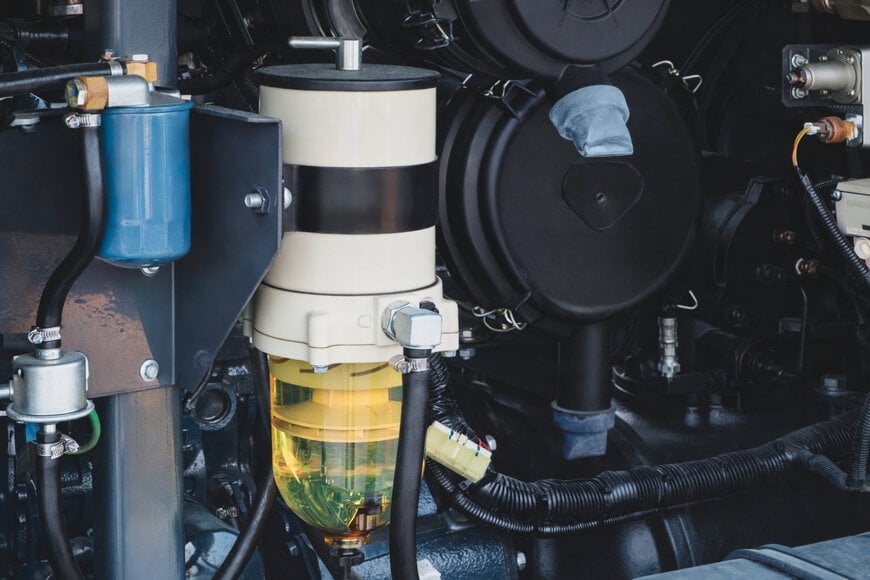
Modern commercial vehicle fleets operate across mixed duty cycles, emissions regulations, and engine generations, placing growing emphasis on lubricant compatibility, durability, and efficiency. FUCHS Lubricants Co. has expanded the technical scope of its TITAN CARGO heavy-duty engine oil portfolio to address these requirements across light-, heavy-, and severe-duty diesel applications.
Addressing current diesel engine requirements
The TITAN CARGO portfolio is formulated for diesel engines equipped with exhaust aftertreatment technologies such as diesel particulate filters (DPF), diesel oxidation catalysts (DOC), selective catalytic reduction (SCR), and exhaust gas recirculation (EGR). Balanced sulfated ash, phosphorus, and sulfur (SAPS) levels, combined with shear-stable viscosity modifiers, are intended to limit ash accumulation and maintain emissions system efficiency over extended operating periods.
The range includes SAE 15W-40, 10W-30, 10W-40, and 5W-30 viscosity grades, allowing fleet operators to align lubricant selection with engine design, ambient temperature conditions, and fuel efficiency strategies. Application areas include long-haul transport, regional delivery, vocational trucks, municipal fleets, and mixed-age vehicle populations.
SAE 15W-40 and 10W-30 for mixed fleets
SAE 15W-40 remains a widely adopted viscosity grade for North American diesel engines due to its tolerance for varied operating conditions. Within the TITAN CARGO range, this formulation meets API CK-4 requirements and carries approvals such as Cummins CES 20086, Detroit Diesel 93K222, Mack EOS-4.5, and Volvo VDS-4.5. These specifications define limits for oxidation stability, piston cleanliness, wear protection, and soot handling under extended drain conditions.
For fleets prioritizing fuel efficiency without transitioning to FA-4 oils, the SAE 10W-30 variant provides a lower-viscosity CK-4 option. Reduced hydrodynamic friction can contribute to measurable fuel consumption reductions, particularly in highway and regional haul cycles, while maintaining compatibility with legacy engines approved for CK-4 lubricants.
High-load and European engine applications
Severe-duty and European-derived diesel platforms often operate under higher thermal and mechanical stress. The SAE 10W-40 formulation in the TITAN CARGO portfolio is designed for these conditions and meets API CJ-4, JASO DH-2, and Caterpillar ECF-3 requirements. Approvals and recommendations include DTFR 15C100/110 (Mercedes-Benz 228.31/228.51), MAN, Renault, IVECO, Scania, Voith, and Deutz.
Higher high-temperature, high-shear (HTHS) viscosity contributes to oil film strength in high-load environments such as refuse collection, construction, and municipal service vehicles, where stop-start operation and elevated engine loads accelerate lubricant degradation.
Low-viscosity 5W-30 strategies and FA-4 considerations
For fleets implementing advanced lubrication strategies, SAE 5W-30 formulations offer improved cold-start performance and further friction reduction. The CK-4-compliant 5W-30 oil meets ACEA E11, E8, and E7 requirements, supporting mixed fleets that include both North American and European engine designs.
A separate FA-4-compliant 5W-30 formulation addresses the latest OEM requirements, including Mack EOS-5, Volvo VDS-5, Renault RLD-5, and DTFR 15C130 (Mercedes-Benz 228.61). FA-4 oils are defined by lower HTHS viscosity limits to improve fuel economy but are not backward-compatible. Their use is restricted to engines explicitly approved by the manufacturer.
Operational impact for fleet maintenance
Across viscosity grades, the TITAN CARGO portfolio is engineered to maintain oxidation control and viscosity stability over extended service intervals where OEM-approved. By aligning lubricant selection with engine specification, duty cycle, and emissions hardware, fleets can reduce unplanned downtime and manage total cost of ownership while maintaining compliance within a modern automotive data ecosystem that increasingly links maintenance decisions to engine performance data.
www.fuchs.com
