
www.auto-innovations.net
03
'26
Written on Modified on
Satellite Voice Integration for Connected Vehicles
HARMAN International and Viasat Inc. integrate NB-NTN satellite voice services into automotive telematics to extend connectivity beyond terrestrial cellular coverage.
www.harman.com
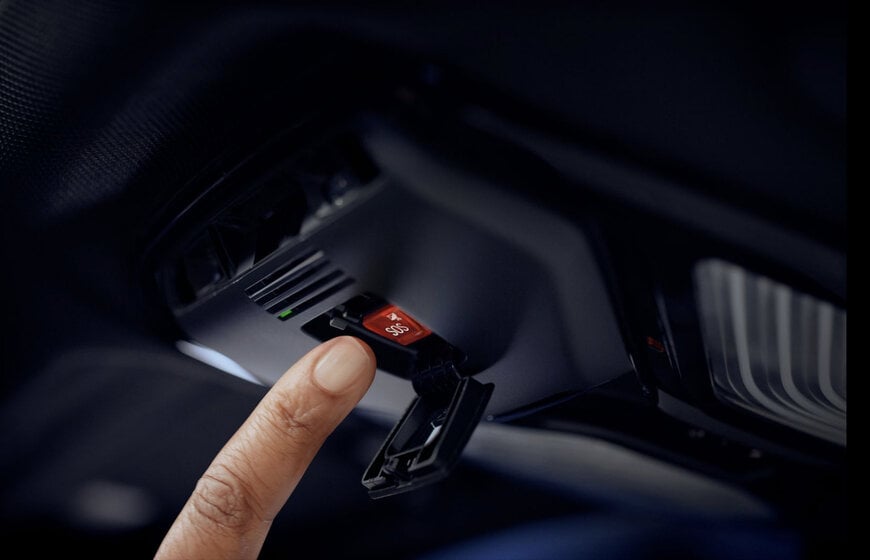
HARMAN and Viasat are collaborating to enable in-cabin voice calls over satellite communications within HARMAN’s Ready Connect telematics platform. The solution targets automotive OEMs seeking resilient connectivity for safety and low-data-rate services in areas with limited or no cellular coverage.
Context and Industrial Challenge
Modern vehicles rely on cellular networks for emergency calls, telematics and connected services. However, coverage gaps remain in rural corridors, cross-border routes and remote regions. For safety-critical applications such as eCall, roadside assistance and remote diagnostics, uninterrupted connectivity is a regulatory and operational requirement.
The cooperation addresses this challenge by combining HARMAN’s telematics control unit (TCU) architecture with Viasat’s Mobile Satellite Services (MSS) infrastructure. The objective is to provide baseline voice and messaging services via satellite as a complement to 4G and 5G networks, strengthening digital infrastructure for connected vehicles.
Technical Architecture and Roles
HARMAN contributes its Ready Connect TCU, which supports 4G, 5G and 3GPP-compliant Narrowband Non-Terrestrial Network (NB-NTN) connectivity within a unified hardware platform. The system leverages a Snapdragon Modem-RF Gen 2 chipset to manage multi-bearer communication and dynamic switching between terrestrial and satellite links.
Viasat acts as Satellite Network Operator (SNO), providing access to its licensed MSS spectrum and satellite constellation. The NB-NTN architecture enables low-data-rate voice and messaging services optimized for constrained bandwidth environments. Voice calls are routed via satellite when terrestrial signal thresholds fall below predefined parameters, ensuring service continuity without requiring separate communication modules.
The integration adheres to 3GPP Release 17 NB-NTN specifications, allowing OEMs to deploy satellite functionality within existing telematics frameworks rather than implementing standalone satellite hardware.
Deployment and Integration
The solution is demonstrated on production-ready TCUs and is available for OEM integration. Implementation involves firmware configuration to enable satellite fallback logic and backend provisioning through Viasat’s network infrastructure.
From an engineering perspective, the approach minimizes additional vehicle architecture complexity by maintaining a single telematics unit capable of multi-network access. This reduces packaging constraints and simplifies lifecycle management compared to dual-module designs.
Applications and Use Cases
Primary applications include:
- Emergency voice calls in areas without cellular coverage
- Roadside assistance and breakdown communication
- Low-bandwidth telematics data transmission
- Stolen vehicle tracking and remote diagnostics
These use cases are particularly relevant for long-haul transport, off-road vehicles and cross-border passenger mobility.
Operational Impact
By integrating NB-NTN satellite capability into standard telematics hardware, OEMs can extend coverage without deploying additional infrastructure. The mechanism enhances process reliability in safety workflows and supports regulatory compliance where emergency call availability is required.
The collaboration establishes a scalable framework for future expansion toward higher-bandwidth satellite services while maintaining compatibility with existing automotive industrial automation and connectivity architectures.
www.harman.com
Operational Impact
By integrating NB-NTN satellite capability into standard telematics hardware, OEMs can extend coverage without deploying additional infrastructure. The mechanism enhances process reliability in safety workflows and supports regulatory compliance where emergency call availability is required.
The collaboration establishes a scalable framework for future expansion toward higher-bandwidth satellite services while maintaining compatibility with existing automotive industrial automation and connectivity architectures.
www.harman.com
