
www.auto-innovations.net
24
'26
Written on Modified on
Integrated Front-End Modules for Electric Vehicle Sensing and Lighting
FORVIA HELLA has launched series production of highly integrated front-end shields to consolidate lighting, styling, and sensor protection for the automotive data ecosystem.
www.forvia.com
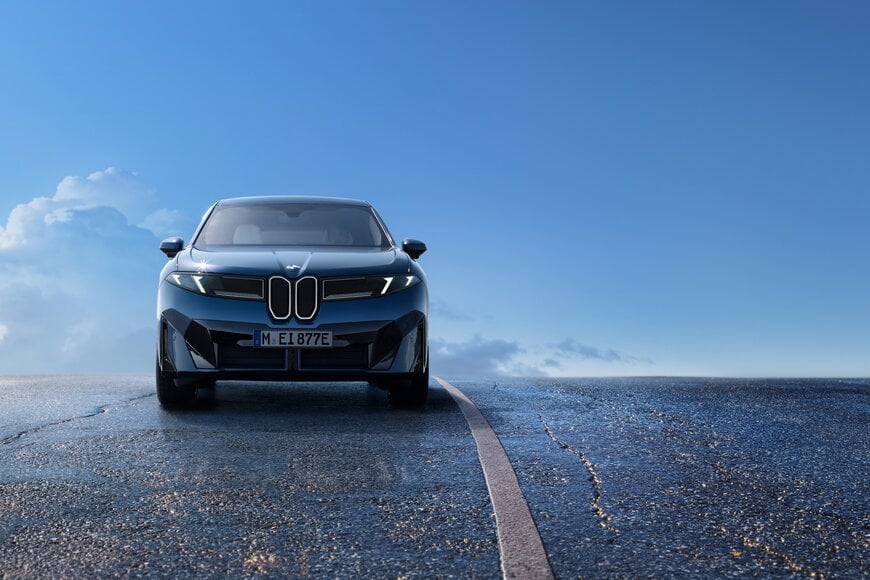
The development of the Front Phygital Shield represents a shift in vehicle architecture, moving from traditional radiator grilles to multifunctional, solid-state surfaces that house essential electronics for electric and autonomous vehicles. By consolidating LED headlamps, decorative elements, and radar-transparent covers into a single unit, this technology simplifies the digital supply chain and reduces assembly complexity for original equipment manufacturers (OEMs).
Functional Integration of Lighting and Sensing
The transition to electromobility eliminates the need for large airflow apertures at the front of the vehicle. FORVIA HELLA utilizes this reclaimed space to house a scalable platform that integrates primary lighting functions with advanced driver assistance system (ADAS) hardware. In the BMW iX3, the inaugural model of the Neue Klasse, these modules incorporate vertically oriented kidney grilles and horizontal LED headlamps.
Beyond aesthetics, the technical utility of the shield lies in its role as a protective interface for environmental perception sensors. The module includes a radar-transparent cover equipped with an integrated heating function. This mechanism ensures that radar performance remains consistent by preventing the accumulation of ice or snow, which can attenuate signals and compromise automated driving functions in adverse weather conditions.
Manufacturing and Development Standards
The production of these modules is centralized at the global competence center for car body lighting in Ljubljana, Slovenia. The manufacturing process focuses on high-precision integration of optical components and sensor-compatible materials. Juan Manuel Mollá, a member of the Management Board at FORVIA HELLA, noted that the product addresses simultaneous trends in electrification and automated driving by creating a new category of automotive components. According to Mollá, the integration of these features into a single module reduces the number of individual interfaces an OEM must manage during the development and front-end assembly phases.
Impact on Automotive Design Language
The implementation of the Front Phygital Shield allows for a reinterpretation of brand-specific design elements through digital lighting. The use of optional Iconic Glow illumination within the shield demonstrates how static brand markers are being replaced by dynamic, light-based signatures. Because the shield acts as a singular housing for both the illumination source and the protective lens, it provides a seamless surface that improves aerodynamic efficiency compared to traditional multi-part front-end assemblies. This highly integrated approach is a fundamental element in the evolution of the automotive data ecosystem, where the vehicle exterior serves as both a structural component and a functional housing for high-frequency sensing technology.
Edited by Evgeny Churilov, Induportals Media - Adapted by AI.
www.hella.com
