
www.auto-innovations.net
01
'26
Written on Modified on
Schaeffler advances software-defined vehicle architectures
Schaeffler presents system-level innovations in vehicle control, powertrain and energy management at its Automotive Symposium, targeting software-defined mobility solutions.
www.schaeffler.com
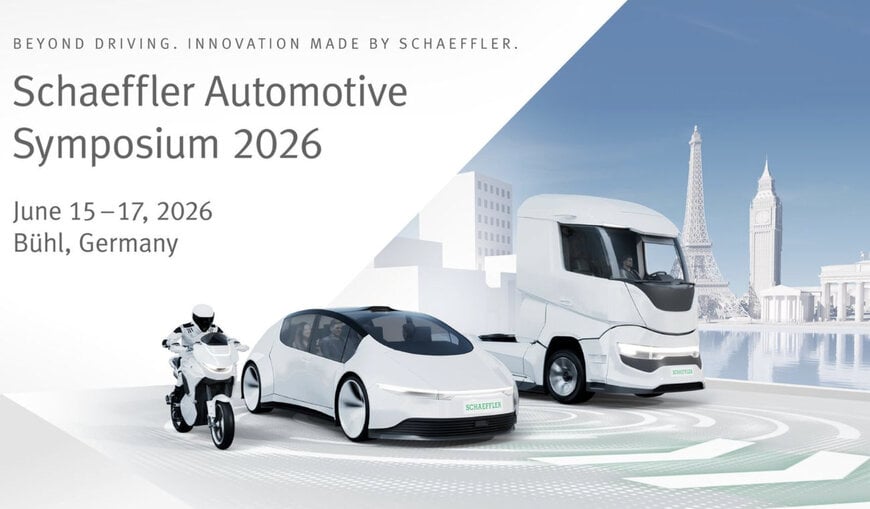
Schaeffler will present its latest developments in mobility technologies at the 13th Automotive Symposium, focusing on system-level innovations for software-defined vehicles (SDV). The event brings together industry stakeholders to address the integration of electrification, connectivity and automation within modern vehicle architectures.
Context of the development
The automotive sector is undergoing a transition from hardware-centric engineering to software-driven system design. This shift requires the integration of multiple domains, including vehicle control, powertrain, chassis and energy management, into cohesive architectures.
Schaeffler positions itself as a technology partner supporting this transition by combining mechanical expertise with electronics and software capabilities, addressing requirements across passenger cars, commercial vehicles and two-wheelers.
System architecture and technical approach
A central focus is the development of integrated vehicle control systems at the full-vehicle level. Instead of treating functions as isolated components, Schaeffler applies a system-based approach that links sensors, actuators and control units within a unified architecture.
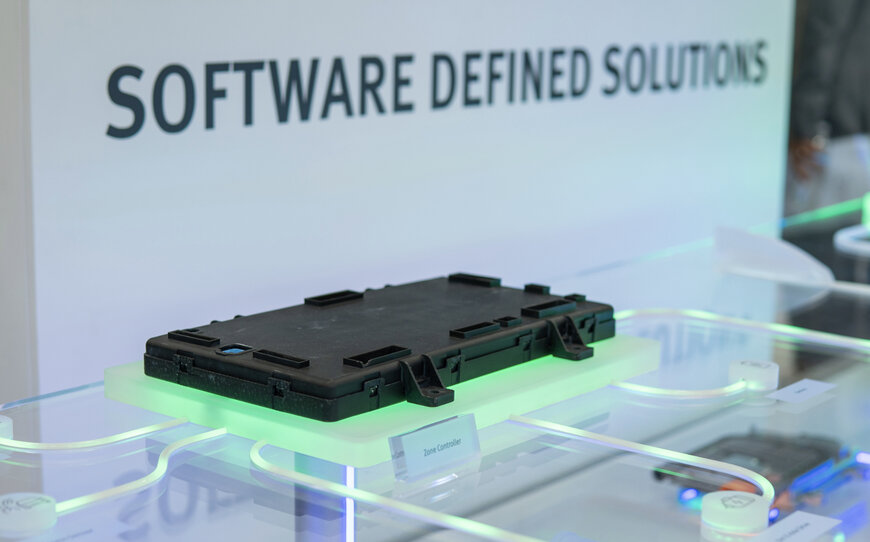
The company’s portfolio for SDV architectures includes low- and high-voltage subsystems, drive systems, edge electronic control units (ECUs) and zone control devices. These elements are designed to operate within centralized electrical/electronic (E/E) architectures.
A key development area is the design of scalable E/E architectures that reduce the number of distributed control units while enabling software-driven functionality across vehicle generations. This approach supports hardware abstraction and accelerates development cycles.
Centralized control and communication technologies
Schaeffler is advancing centralized vehicle architectures based on multi-domain controllers, also referred to as high-performance computers (HPCs). These systems enable cross-domain control of vehicle functions, improving efficiency and reducing system complexity.
The use of Ethernet-based communication channels, combined with protocols such as Remote Control Protocol (RCP), allows data to be managed centrally. This reduces reliance on decentralized control units, lowers integration complexity and supports cost optimization through software centralization.
Implementation and system integration
The proposed architectures integrate components such as 48-volt electrical systems, power electronics and safety-critical subsystems, including steer-by-wire technologies with built-in redundancy. These systems are designed to meet functional safety requirements while enabling scalability across different vehicle platforms.
The integration of hardware and software components supports modular system design, allowing manufacturers to adapt architectures to different vehicle classes and use cases.
Applications and use cases
The solutions are applicable to software-defined vehicles requiring high levels of integration, real-time data processing and cross-domain functionality. Typical use cases include advanced driver assistance systems, electrified powertrains and centralized vehicle control platforms.
These architectures also support future mobility concepts, where vehicle functions are increasingly defined and updated through software.
Operational impact
By reducing the number of control units and centralizing system intelligence, the approach enables more efficient system design, lower hardware complexity and improved maintainability. It also facilitates faster development and deployment of new vehicle functions.
Schaeffler’s system-level strategy contributes to the development of scalable, future-ready vehicle platforms aligned with the requirements of electrified, automated and connected mobility.
Edited by Maria Brueva, Induportals editor – adapted by AI.
www.schaeffler.com
