
www.auto-innovations.net
08
'26
Written on Modified on
Hydrogen Fuel Cell Integration for Next-Generation Transit Platforms
Wrightbus has nominated Ballard Power Systems to provide high-efficiency fuel cell engines for the development of the StreetDeck Hydroliner Gen 3.0 vehicle architecture.
www.ballard.com
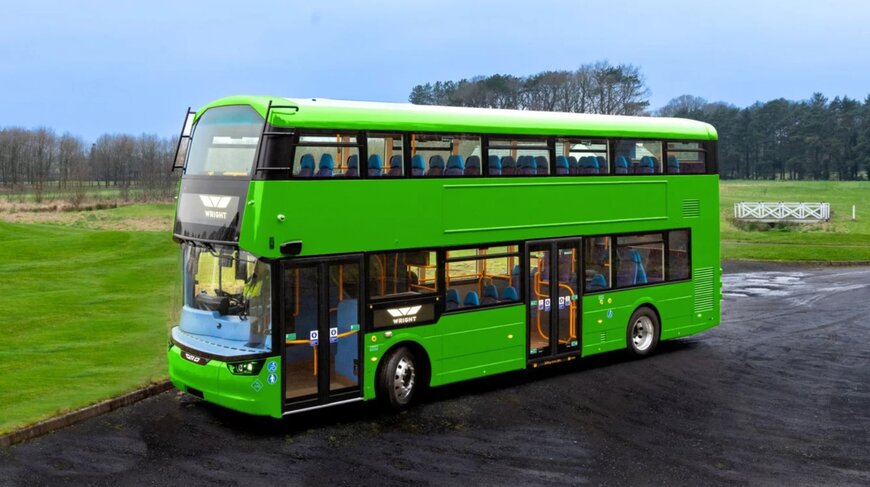
Ballard Power Systems and Wrightbus are collaborating to integrate advanced hydrogen fuel cell technology into a new generation of double-decker buses. This cooperation focuses on the technical implementation of the FCmove-SC engine into the StreetDeck Hydroliner Gen 3.0 platform to support heavy-duty transit applications.
Technical Roles and Objectives
The cooperation utilizes the complementary expertise of both entities: Wrightbus serves as the vehicle OEM and systems integrator, while Ballard Power Systems acts as the primary propulsion technology provider. The partnership addresses the operational challenges of high-utilization duty cycles, where consistent power delivery and thermal management are critical for vehicle uptime.
By selecting Ballard's latest engine platform, Wrightbus aims to improve the total cost of ownership (TCO) for municipal transit operators. This is achieved through a simplified system architecture that reduces the complexity of industrial automation components and mechanical interfaces within the drivetrain.
Engine Specifications and System Architecture
The FCmove-SC engine is characterized by a peak power capability of at least 75kW. The technical design prioritizes several key performance parameters:
- Thermal Margins: Increased thermal headroom allows for higher efficiency during sustained power demands.
- Power Density: A compact module design facilitates easier vehicle integration within the existing chassis constraints of a double-decker bus.
- Durability: The system is engineered for extended service life, targeting the rigorous requirements of public transport networks.
The integration focuses on a "plug-and-play" logic to streamline the assembly process and ensure compatibility with modern digital infrastructure used for fleet monitoring and diagnostics.
Implementation and Fleet Support
Series production for the Gen 3.0 platform is scheduled to commence in 2027. The implementation phase includes rigorous testing of the fuel cell stack and auxiliary components to ensure they meet the 98% availability standards observed in current Ballard-powered fleets, which have surpassed 300 million kilometers of operational history. Beyond the hardware integration, the partnership includes a comprehensive support framework through Ballard Fleet Services.
This involves:
Implementation and Fleet Support
Series production for the Gen 3.0 platform is scheduled to commence in 2027. The implementation phase includes rigorous testing of the fuel cell stack and auxiliary components to ensure they meet the 98% availability standards observed in current Ballard-powered fleets, which have surpassed 300 million kilometers of operational history. Beyond the hardware integration, the partnership includes a comprehensive support framework through Ballard Fleet Services.
This involves:
- Operational Monitoring: Utilizing digital insights to track stack health and fuel consumption.
- Maintenance Protocols: Establishing standardized training and parts supply chains to ensure long-term reliability.
- Lifecycle Management: Ongoing stack servicing to maintain efficiency levels throughout the vehicle's operational lifespan.
This technical collaboration ensures that the transition to zero-emission transit maintains the same reliability and duty-cycle flexibility as conventional internal combustion engine fleets.
Edited by Evgeny Churilov, Induportals Media - Adapted by AI.
www.ballard.com
Edited by Evgeny Churilov, Induportals Media - Adapted by AI.
www.ballard.com
