
www.auto-innovations.net
22
'26
Written on Modified on
Inkjet Technology Targets Digital Battery Coating
Xaar will showcase battery coating systems for EV and energy storage manufacturing at The Battery Show Europe in Stuttgart, Germany, from 9–11 June, stand 5A40.
www.xaar.com
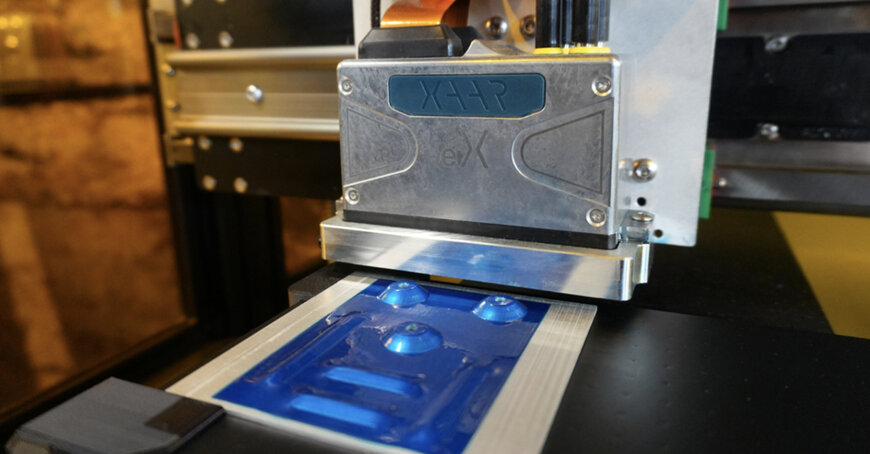
Xaar is presenting its inkjet-based battery coating technology at The Battery Show Europe, held at Messe Stuttgart, Germany, from 9–11 June. The company will demonstrate how digital coating methods can replace conventional analogue processes used in battery manufacturing, targeting applications in electric vehicles (EVs) and energy storage systems. The exhibition will also include demonstrations linked to Xaar’s collaboration with industrial inkjet specialist Inkatronic.
As battery manufacturers face increasing pressure to improve energy density, thermal management and production efficiency, coating processes have become a critical stage in cell manufacturing. Coatings contribute to insulation, thermal protection and durability in densely packed battery architectures, where inconsistencies may affect performance and lifespan.
Digital battery coating addresses precision and process flexibility
Traditional battery coating methods including PET film application and spray coating can encounter limitations in material efficiency, deposition control and adaptation to different battery geometries. Xaar positions inkjet deposition as a digital alternative intended to improve coating consistency while reducing process complexity.
The company’s battery coating technology is built around its eX series printheads, developed for prismatic and cylindrical battery formats used in EV and energy storage applications. Supporting different battery architectures is increasingly important as manufacturers diversify cell designs to optimise performance, cost and packaging requirements.
High-viscosity fluid handling supports functional battery materials
The coating technology incorporates Ultra High Viscosity Technology, enabling deposition of advanced functional fluids used in demanding battery applications. Higher-viscosity materials are often associated with insulating and protective coatings requiring controlled application thickness.
Additional technologies include TF Technology recirculation, which enables coating in multiple orientations including edges and corners without repositioning components, and High Laydown Technology designed to apply thicker coatings in a single pass. The company states SureFlow self-cleaning technology reduces printhead blockages and associated downtime.
These functions aim to improve throughput, coating uniformity and operational reliability in battery manufacturing environments.
Industry collaboration expands development of digital manufacturing systems
Xaar’s exhibition demonstrations will reference development work with Inkatronic, a company specialising in bespoke inkjet systems and industrial research. Such collaborations increasingly support adaptation of digital manufacturing technologies to emerging industrial requirements where process validation and material compatibility remain critical challenges.
The company will also present a session titled The digitising of insulating coatings for EV-battery cells: How inkjet will revolutionise the next generation of battery insulating coating lines, examining the role of digital deposition in battery production processes.
Additional Context
Technical specifications and competitive benchmarking not included in the original product announcement
Battery coating technologies compete with systems from companies including Dürr, Coatema and applications based on slot-die coating, spray coating and film lamination processes. Benchmark criteria commonly include coating thickness uniformity, material utilisation, production speed and compatibility with high-viscosity functional materials.
Compared with conventional analogue methods such as spray coating, digital inkjet deposition can reduce material waste through targeted application and support variable coating patterns without changing tooling. Xaar’s differentiation centres on handling high-viscosity functional fluids and applying thicker coatings in fewer passes, capabilities increasingly relevant for insulating layers in next-generation EV battery production.
Edited by Natania Lyngdoh, Induportals editor, assisted by AI.
www.xaar.com
