
www.auto-innovations.net
29
'26
Written on Modified on
CCS2 Charging Connectors for Fast EV Infrastructure
Rutronik expands its electric vehicle charging portfolio with European-manufactured connectors designed for high-voltage charging and grid integration.
www.rutronik.com
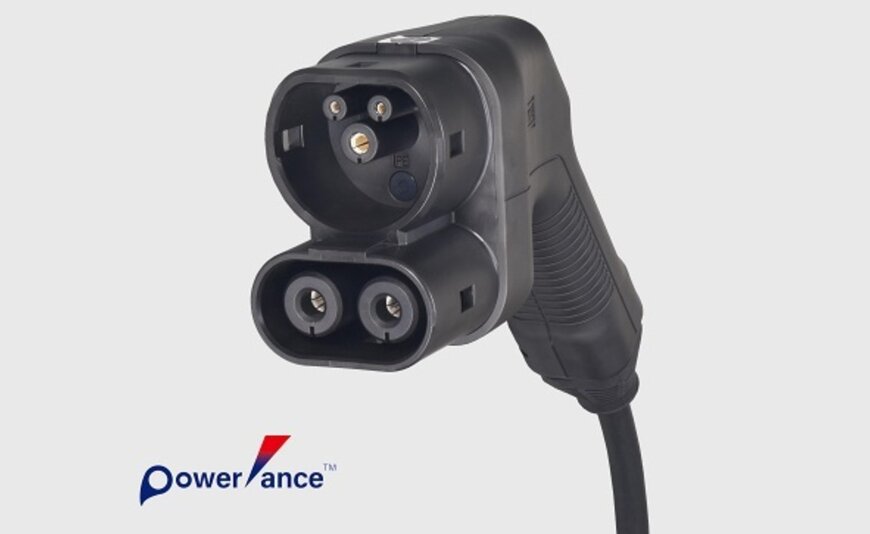
As electric vehicle adoption increases across Europe, charging infrastructure providers are seeking components capable of supporting higher charging power, improved durability, and emerging bidirectional energy applications. Rutronik has expanded its e-mobility portfolio with JAE's KW21A series of CCS2-compatible DC charging connectors, designed for fast-charging stations, smart charging networks, and Vehicle-to-Grid (V2G) systems.
The connector series supports high-voltage DC charging applications and is intended for use in public charging stations, industrial charging infrastructure, and advanced energy-management systems where reliability, safety, and interoperability are critical requirements.
CCS2 Interface Supports European EV Charging Standards
The KW21A series has been developed around the Combined Charging System Type 2 (CCS2), which serves as the primary DC charging standard across Europe. Compliance with CCS2 requirements enables interoperability between charging infrastructure and a broad range of electric vehicles operating within the European market.
To support regional supply chains and infrastructure deployment, the connectors are manufactured in Europe. The series has achieved CE certification and is designed to comply with applicable safety and performance requirements for high-voltage charging applications.
The increasing deployment of CCS2 infrastructure across public charging networks has created demand for charging connectors capable of supporting higher power levels while maintaining compatibility with evolving charging standards and smart-grid architectures.
High-Voltage Charging Capability for DC Fast Charging
The connector series supports rated charging currents of 40 A or 100 A at system voltages of up to 1,000 VDC.
These electrical specifications make the connectors suitable for DC fast-charging systems operating under Mode 4 charging architectures. High-voltage charging systems reduce charging times by enabling greater power transfer while minimizing current-related losses across the charging system.
Applications include public fast-charging stations, fleet charging installations, commercial vehicle charging infrastructure, and mobile charging systems where rapid energy transfer is a key operational requirement.
As vehicle battery capacities continue to increase, charging infrastructure components must support higher voltage architectures while maintaining safe operation under demanding environmental conditions.
Bidirectional Charging Enables Vehicle-to-Grid Integration
One of the key features of the connector series is support for bidirectional charging functionality.
Vehicle-to-Grid technology enables energy to flow in both directions between an electric vehicle and the electrical grid. In addition to charging the vehicle battery, V2G systems can return stored energy to the grid when required, supporting grid balancing, peak-load management, and distributed energy storage strategies.
As utilities and energy providers increasingly explore grid-interactive charging systems, bidirectional charging capability is becoming an important requirement within the broader smart mobility and energy ecosystem.
The ability to support V2G applications positions the connector series for future charging networks that integrate transportation electrification with renewable energy management.
Environmental Protection and Electrical Safety Design
The KW21A series incorporates multiple design elements intended to improve safety and operational reliability in outdoor charging environments.
A double-insulated plastic housing provides additional protection against moisture ingress and environmental exposure. When connected to a charging inlet, the connector achieves an IP54 protection rating, while the connector body itself is designed to achieve an IP67 rating, providing resistance to dust and water exposure in demanding operating environments.
The connectors also feature a dielectric withstand capability of AC 3,000 V for one minute, supporting electrical isolation requirements associated with high-voltage charging systems.
These characteristics are particularly important for charging infrastructure deployed in public locations where equipment is exposed to varying weather conditions and frequent user interaction.
Integrated Temperature Monitoring for Operational Reliability
To support thermal management during high-power charging sessions, the connector incorporates an integrated Pt1000 temperature sensor compliant with DIN EN 60751.
Pt1000 sensors are widely used in industrial and automotive applications because of their accuracy and stability across a broad temperature range. Within charging systems, temperature monitoring enables operators to detect abnormal thermal conditions and implement protective measures before excessive temperatures affect performance or safety.
The inclusion of integrated temperature sensing supports reliable operation under sustained high-current charging conditions and contributes to overall charging system safety.
Durability Requirements for Public Charging Networks
Charging connectors used in public infrastructure must withstand frequent connection and disconnection cycles throughout their service life.
The KW21A series is specified for up to 10,000 mating cycles and operates across an ambient temperature range from -35°C to +50°C. These specifications are intended to support long-term deployment in outdoor charging stations located in varying climatic conditions.
The connectors also feature a compact and lightweight design with flexible cable routing, which can improve handling for users while simplifying installation for charging equipment manufacturers.
Such durability characteristics are increasingly important as charging operators expand infrastructure networks and seek to minimize maintenance requirements across geographically distributed installations.
Applications in Smart Charging Infrastructure
The connector series is designed for multiple electric mobility applications, including CCS2-based DC fast-charging stations, Vehicle-to-Grid installations, smart charging infrastructure, mobile charging systems, and high-voltage automotive platforms.
As charging infrastructure evolves beyond simple energy delivery toward intelligent energy management, charging components are increasingly expected to support communication, monitoring, and bidirectional power-flow requirements.
Within this context, CCS2-compatible charging connectors play a critical role in enabling interoperability across electric vehicles, charging stations, utilities, and the broader digital supply chain supporting transportation electrification.
Additional Context
This section details technical specifications and competitive benchmarking not included in the original news release.
The KW21A series operates within a market that includes CCS2 charging connectors and charging-cable systems from suppliers such as Phoenix Contact, TE Connectivity, HUBER+SUHNER, Amphenol, and Mennekes. Common benchmark criteria for DC charging connectors include maximum voltage rating, current-carrying capacity, ingress protection level, mating-cycle durability, thermal monitoring capability, support for bidirectional charging, and compliance with CCS2 standards.
With support for up to 1,000 VDC, charging currents of 40 A and 100 A, integrated Pt1000 temperature sensing, IP54/IP67 environmental protection, and a service life of up to 10,000 mating cycles, the KW21A series aligns with key performance requirements of modern DC charging infrastructure. Its support for Vehicle-to-Grid operation reflects a broader industry trend toward bidirectional energy systems, where charging infrastructure serves not only as an energy delivery point but also as a distributed energy-management asset within future smart-grid networks.
Edited by Aishwarya Mambet, Induportals Editor, with AI assistance.
www.rutronik24.com
