
www.auto-innovations.net
04
'26
Written on Modified on
High-Performance Hydrogen Propulsion for Motorsport and Hypercars
Bosch Motorsport and Maserati optimize the Nettuno V6 engine for hydrogen fuel, installing it in the Ligier JS2 RH2 racing prototype for the 24 Hours of Le Mans.
www.bosch.com
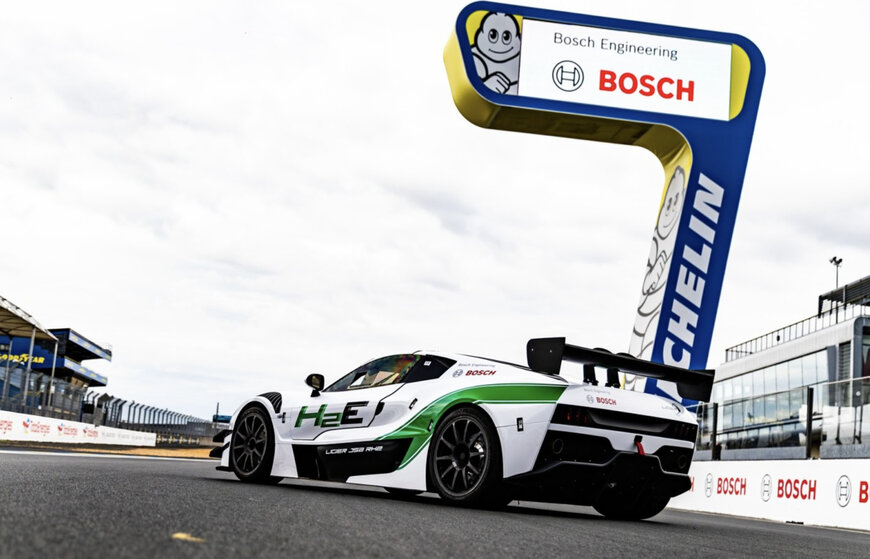
Converting traditional internal combustion engines to alternative powertrains represents a fundamental milestone for the decarbonization of high-performance racing. The development of thermal engines powered by hydrogen gas offers a practical solution to maintain the driving dynamics and acoustic characteristics typical of motorsport while drastically reducing the carbon footprint of racing cars.
Hydrogen Combustion Engine Development Based on Maserati
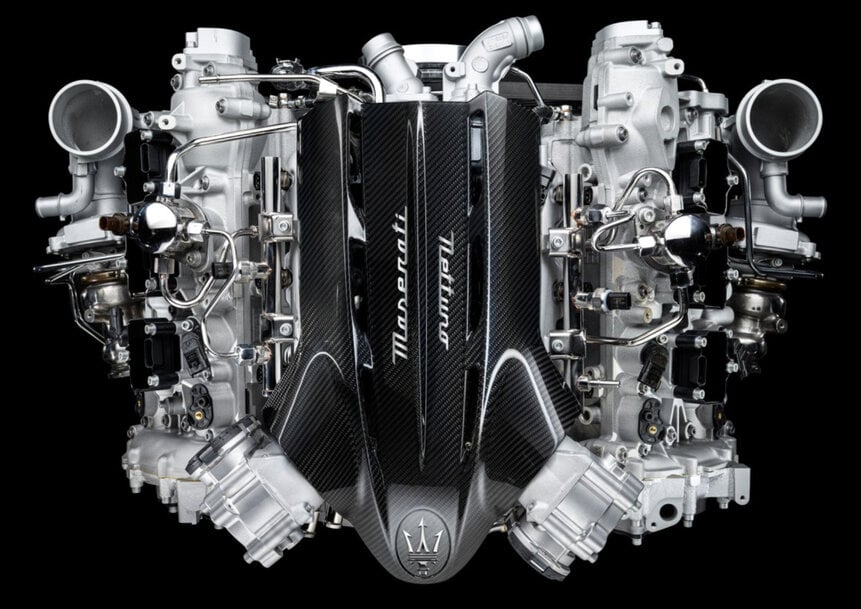
The power unit developed by Bosch Engineering is fundamentally based on Maserati's Nettuno petrol engine, a twin-turbo 3.0-liter 6-cylinder engine with dry sump lubrication. Retaining the core structure of the original design, including the turbochargers and cylinder head, engineers optimized piston geometry and reduced the compression ratio to ensure maximum efficiency and structural stability at high engine speeds, integrating the system seamlessly into the digital supply chain of engine development.
Hydrogen Direct Injection and Performance Metrics
The core of the technological transformation lies in the fuel delivery system. The original combined injection has been replaced with an advanced hydrogen direct injection system utilizing special Bosch HIDI LCV injectors. This configuration, supported by a recalibration of the ignition system and the electronic engine control unit, allows the 3.0-liter power unit to deliver approximately 480 kW of power and a maximum torque of 880 Nm for the motorsport version. The intrinsic robustness of the original engine block allows it to withstand the high internal cylinder pressures generated by hydrogen combustion.
Track Validation and Strategic Partnerships
Validation of the propulsion system was conducted through a strategic partnership with Ligier Automotive, which led to the creation of the Ligier JS2 RH2 racing prototype. Since its debut at the 24 Hours of Le Mans in June 2023, the car has completed nearly 8,000 kilometers of track testing under various weather conditions without experiencing any technical anomalies. Continuous software and mechanical refinements have increased power density while further reducing emissions, preparing the vehicle for a demonstration lap on the Le Mans circuit on Saturday, June 13, 2026, within the framework of the automotive data ecosystem.
Additional Context: This section details technical specifications and competitive benchmarking not included in the original product announcement
In the landscape of hydrogen-fueled internal combustion engines for high-performance applications, managing the air-fuel ratio and preventing pre-ignition represent the primary engineering challenges. Bosch's direct injection solution competes directly with hydrogen propulsion systems developed by manufacturers like Toyota, which experiments with hydrogen combustion engines in Japanese endurance championships using a smaller displacement, turbocharged three-cylinder engine. The use of a twin-turbo 3.0-liter V6 architecture allows Bosch and Maserati to achieve significantly higher power levels, close to the parameters of modern hypercars.
A crucial benchmark lies in energy density and airflow management. Hydrogen gas occupies a larger volume in the combustion chamber compared to atomized gasoline, reducing the amount of available oxygen if injected into the intake manifolds. Adopting high-pressure Bosch HIDI LCV injectors directly into the combustion chamber overcomes this limitation, maximizing cylinder filling and reducing the risk of backfire in the manifolds. This positions the technical architecture in direct competition with fuel cell systems, offering an immediate dynamic engine response while maintaining the traditional acoustic profile of competitive racing.
Compared to hydrogen fuel cells, which convert gas into electricity to power electric motors and require complex cooling and internal chemistry management systems, the hydrogen combustion engine leverages existing mechanical supply chains. This reduces transition costs for motorsport teams and high-performance track car manufacturers. The integration of combustion chamber pressure sensors and advanced control algorithms within the Bosch ECU allows real-time monitoring of flame propagation speed, ensuring maximum structural reliability under extreme stress conditions such as endurance racing at Le Mans.
Edited by Maria Brueva, Induportals editor – adapted by AI.
www.bosch.com
