
www.auto-innovations.net
09
'26
Written on Modified on
Strategic Energy Management and System Integration in E-Mobility
Schaeffler outlines holistic powertrain architectures and next-generation battery intelligence at the 13th Schaeffler Automotive Symposium.
www.schaeffler.com
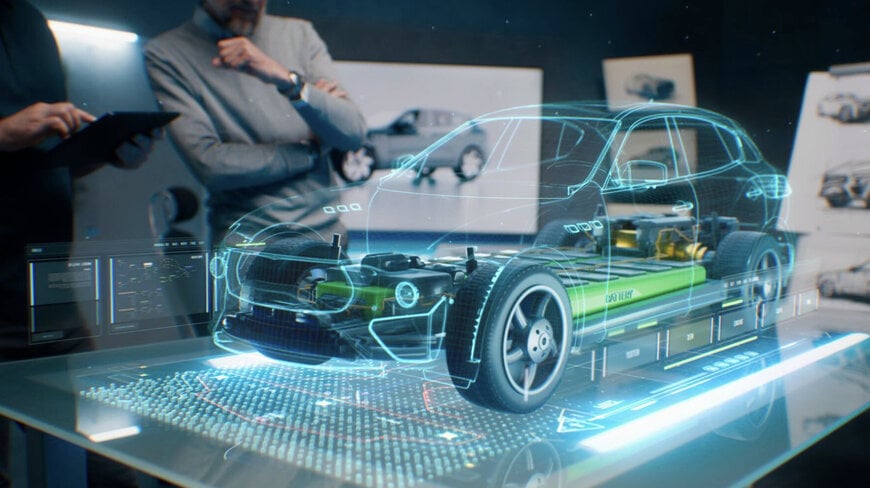
The successful transition to electromobility depends fundamentally on the implementation of holistic energy concepts for electrified vehicles. Efficient energy management serves as the baseline prerequisite for critical vehicle functions, including propulsion, charging, battery conditioning, and cabin climate control. At the 13th Schaeffler Automotive Symposium, scheduled for September 22–24, 2026 in Bühl, Germany, the Motion Technology Company will demonstrate that optimized energy management extends far beyond the driving cycle to encompass all aspects of system performance, volumetric efficiency, and customer value. Based on the principle that energy is transformed rather than lost, the company focuses on integrated solutions that convert and distribute energy seamlessly across interconnected vehicle systems.
Systems Know-How as a Core Performance Driver
In advanced e-mobility architectures, overall vehicle performance is determined by systemic interaction rather than individual component specifications. Effective energy management requires a systematic evaluation of the high-voltage architecture, the battery, and thermal management as a unified ecosystem to deliver tangible advantages in manufacturing costs, operational efficiency, range, and power delivery.
The Schaeffler Vehicle Control Ecosystem
The core subsystems governing energy management include the high-voltage powernet for electrical energy distribution, the high-voltage battery acting as the primary storage system, and the electric motor responsible for drive and recuperation. These are augmented by advanced thermal management systems that convert electrical energy into thermal energy via electric compressors while actively reclaiming ambient heat.
Schaeffler integrates these multi-domain functionalities within the Schaeffler Vehicle Control Ecosystem to manage vehicle energy flows holistically, efficiently, and sustainably. This integration strategy extends beyond standard vehicle functions to focus on electric axles and battery-centric architectures. This design methodology ensures that installation space is utilized efficiently, maximizing power density and overall system performance.
Key Technologies and Component-Level Innovation
Targeted innovations at the component level unlock additional optimization potential without disrupting system integration, thereby strengthening overall system interaction. For next-generation battery systems, development priorities center on optimized charging speeds, heightened energy density, and rigorous safety standards. Schaeffler addresses these requirements through advanced cooling concepts, including oil-cooled battery cells and dedicated battery cooling modules designed to maintain optimal thermal windows. Furthermore, the implementation of intelligent battery monitoring software enables the real-time tracking of state-of-health and state-of-charge parameters, while flexible mechanical architectures allow for seamless adaptation to various cell formats and chemical compositions.
At the systemic level, Schaeffler continues to advance high-voltage architectures, intelligent charging systems, thermal integration, and vehicle-to-grid (V2G) functionality. These key technologies mitigate the engineering challenges associated with hardware/software integration, component complexity, and structural packaging. Notably, the integration of X-in-1 electronics for the high-voltage powernet enables cost-effective, high-efficiency battery performance, establishing the technical foundation for commercially viable e-mobility.
Schaeffler Automotive Symposium 2026
As Schaeffler’s premier automotive customer event, the Schaeffler Automotive Symposium 2026 will be held in Bühl, Germany, on September 22–24, 2026. The event will showcase product solutions from the "Energy Management" technology cluster, allowing the Motion Technology Company to demonstrate its specialized expertise in optimizing supply and storage systems for electrified powertrains and shifting the paradigm of vehicle performance beyond pure driving dynamics.
Èdited by Maria Brueva, Induportals editor – adapted by AI.
www.schaeffler.com
