
www.auto-innovations.net
25
'26
Written on Modified on
BMW Group optimizes the sustainability of the X5
With the new vehicle, the German group actively seeks to significantly reduce harmful emissions during the entire life cycle of this innovative automobile.
www.bmw.com
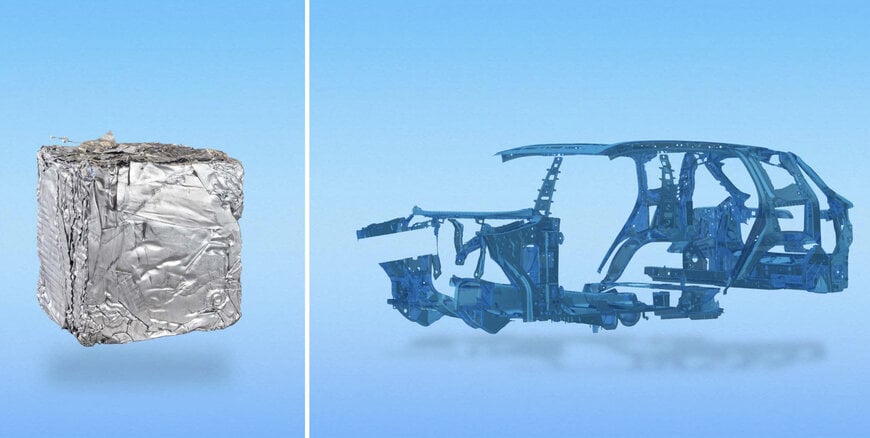
With the new BMW X5, the BMW Group is systematically extending its holistic approach to sustainability to more product lines. The primary goal is to further optimize the vehicle's entire life cycle and minimize its carbon footprint, starting from the supply chain and production, all the way to the use phase and the final recycling of materials.
Decarbonization as a Fundamental Lever
Targeted decarbonization across the entire supply chain represents a key strategy to reduce global emissions. The group is particularly focused on renewable energy, the use of secondary materials, and constant process innovations. The impact of this rigorous approach is reflected in the results achieved: during the product development process, the emissions of the BMW X5 were reduced by approximately 40%.
A further step is represented by the increased use of low environmental impact steel sheets for the bodywork. About 50% of the steel used in the vehicle is produced in electric arc furnaces, featuring a high percentage of secondary material and made using renewable energy thanks to a solid collaboration with suppliers in North America.
Systematic Use of Secondary Materials
The new BMW X5 reaches a very high percentage of secondary raw materials, integrated even in components subjected to strong mechanical stress. These include aluminum suspension elements such as rims, bearings, wheel mounts, and brake calipers, all manufactured using clean energy. The aluminum intended for the doors contains 35% closed-loop recycled material originating from the Spartanburg plant.
Furthermore, the base material for the interior roof lining is composed entirely of recycled PET. In the fully electric BMW iX5 60 xDrive version, approximately one-third of the entire vehicle consists of secondary raw materials, reaching a total weight of 940 kilograms.
Gen6 Battery Cells and Operational Efficiency
The new Gen6 battery cells used in the high-voltage system include a significant percentage of secondary materials regarding cobalt, lithium, and nickel. The production of the anode and cathode materials also utilizes renewable energy, which leads to an emissions reduction of approximately 28% per watt-hour compared to the previous generation.
During the use phase, the EfficientDynamics technology package optimizes aerodynamics, lightweight construction, and overall energy management. The vehicle is also equipped with the exclusive BMW Dynamic Performance Control driving system. Thanks to smooth drivability, the system significantly improves efficiency by recovering a greater amount of energy during deceleration phases.
Ecological Advantage and Sustainable Production
The rigorous decarbonization measures applied to the supply chain determine a heavily anticipated environmental break-even point. Depending on the annual mileage and the source of the electricity used for charging, the electric model achieves a clear advantage in terms of emissions over a combustion vehicle after just one to two years of use.
Production takes place at the BMW Group's largest production center, the Spartanburg plant, where all external electrical energy comes strictly from renewable sources. Between 2006 and 2025, energy consumption per vehicle produced at this facility has decreased by 66%, while the volume of waste sent to landfills has plummeted by 88%. To ensure full transparency, the BMW Group will soon publish the car's official Product Carbon Footprint, validated by the German Technical Inspection Association.
Edited by Maria Brueva, Induportals editor – adapted by AI.
www.bmwgroup.com
