
www.auto-innovations.net
30
'26
Written on Modified on
Megacasting for Electric Vehicle Chassis
Bühler deploys large-scale die-casting cells to consolidate multiple automotive components into single structural elements for European series production.
www.buhlergroup.com
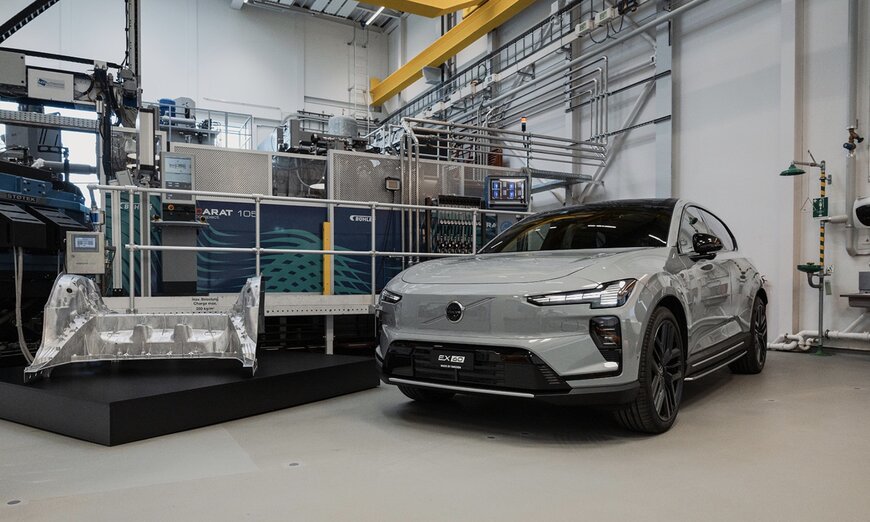
Bühler's megacasting technology enters series production in Europe with the new Volvo EX60. Copyright: Oliver Gary
Bühler is supplying high-pressure megacasting equipment to automotive manufacturers to produce large-scale structural vehicle components in a single piece. The technology is utilized in the production of the rear underbody for electric vehicles, specifically targeting weight reduction and structural consolidation within automotive manufacturing.
Consolidation of Automotive Structural Components
Megacasting relies on high-pressure die casting to inject liquid aluminum into large molds, forming complete vehicle-body sections. At the Volvo Cars Torslanda plant in Sweden, this method replaces approximately 100 conventionally manufactured, stored, assembled, and welded components with a single aluminum part for the EX60 rear underbody. Consolidating the component count reduces manufacturing and logistics steps while increasing the overall structural rigidity of the chassis.
Electric Vehicle Platform Integration
Minimizing chassis weight is a critical engineering requirement for electric vehicles to lower energy consumption and maximize battery driving range. The casted rear underbody integrates directly into the SPA3 electric-vehicle platform, an architecture that utilizes the battery pack as a load-bearing structural element. To implement this industrial automation at scale, a dedicated facility was constructed at the Torslanda plant, located 12 kilometers from Gothenburg, to manage the entire workflow from aluminum melting and die filling to component handling and assembly-line integration.
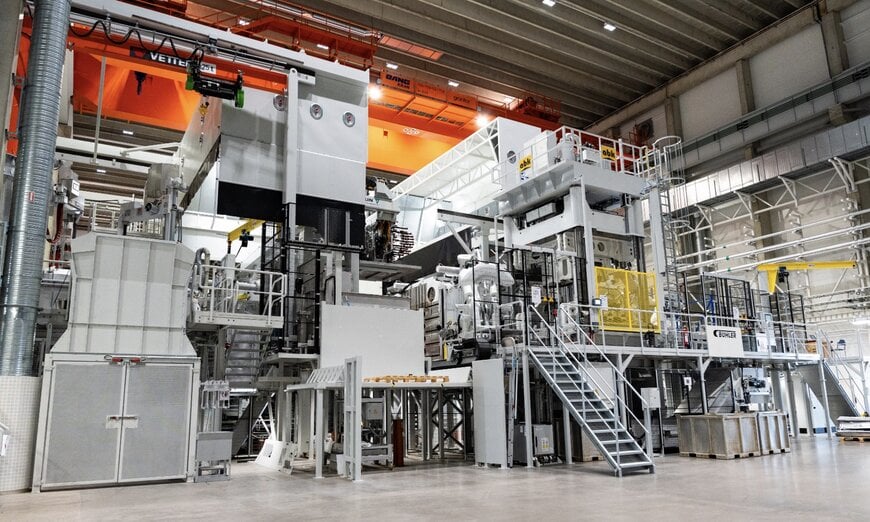
One of the two Bühler Carat 840 megacasting cells at Volvo Cars in Torslanda, Sweden. Copyright: Volvo Cars
High-Pressure Die-Casting Specifications
The manufacturing cells rely on the Carat 840 system, which applies 8,400 tons of locking force to secure the mold while injecting more than 200 kilograms of liquid aluminum in milliseconds. Each operational casting cell stands 7.6 meters high, occupies 160 square meters of floor space, and weighs over 1,000 tons. The system utilizes a 130-ton die equipped with modular inserts, allowing engineers to implement structural design changes to specific sections without replacing the entire die assembly.
“The EX60 is another example of how megacasting is becoming an established part of the automotive manufacturing. As automakers seek more efficient ways to produce electric vehicles, large structural castings are playing an increasingly important part of next-generation vehicle architectures,” says Cornel Mendler, Managing Director Die Casting at Bühler.
Additional Context
This section details technical specifications and competitive benchmarking not included in the original news release.
In the structural die-casting sector, the primary benchmark metric for megacasting machinery is the locking force (clamping force), measured in tons or kilonewtons. Bühler’s Carat 840, with 8,400 tons of locking force, competes directly with machines produced by LK Machinery and its subsidiary Idra Group, which manufacture the Giga Press series. The Giga Press models range from 5,500 to over 9,000 tons of clamping force and have been utilized by manufacturers such as Tesla to cast front and rear underbodies. The 8,000-to-9,000-ton class of die-casting machines is strictly necessary for producing single-piece underbody castings for large electric SUVs and light trucks, as the immense surface area of the molten aluminum requires extraordinary pressure to prevent the mold from separating during the millisecond injection phase.
Edited by Aishwarya Mambet, Induportals Editor, with AI assistance.
www.buhlergroup.com
Bühler is supplying high-pressure megacasting equipment to automotive manufacturers to produce large-scale structural vehicle components in a single piece. The technology is utilized in the production of the rear underbody for electric vehicles, specifically targeting weight reduction and structural consolidation within automotive manufacturing.
Consolidation of Automotive Structural Components
Megacasting relies on high-pressure die casting to inject liquid aluminum into large molds, forming complete vehicle-body sections. At the Volvo Cars Torslanda plant in Sweden, this method replaces approximately 100 conventionally manufactured, stored, assembled, and welded components with a single aluminum part for the EX60 rear underbody. Consolidating the component count reduces manufacturing and logistics steps while increasing the overall structural rigidity of the chassis.
Electric Vehicle Platform Integration
Minimizing chassis weight is a critical engineering requirement for electric vehicles to lower energy consumption and maximize battery driving range. The casted rear underbody integrates directly into the SPA3 electric-vehicle platform, an architecture that utilizes the battery pack as a load-bearing structural element. To implement this industrial automation at scale, a dedicated facility was constructed at the Torslanda plant, located 12 kilometers from Gothenburg, to manage the entire workflow from aluminum melting and die filling to component handling and assembly-line integration.
One of the two Bühler Carat 840 megacasting cells at Volvo Cars in Torslanda, Sweden. Copyright: Volvo Cars
High-Pressure Die-Casting Specifications
The manufacturing cells rely on the Carat 840 system, which applies 8,400 tons of locking force to secure the mold while injecting more than 200 kilograms of liquid aluminum in milliseconds. Each operational casting cell stands 7.6 meters high, occupies 160 square meters of floor space, and weighs over 1,000 tons. The system utilizes a 130-ton die equipped with modular inserts, allowing engineers to implement structural design changes to specific sections without replacing the entire die assembly.
“The EX60 is another example of how megacasting is becoming an established part of the automotive manufacturing. As automakers seek more efficient ways to produce electric vehicles, large structural castings are playing an increasingly important part of next-generation vehicle architectures,” says Cornel Mendler, Managing Director Die Casting at Bühler.
Additional Context
This section details technical specifications and competitive benchmarking not included in the original news release.
In the structural die-casting sector, the primary benchmark metric for megacasting machinery is the locking force (clamping force), measured in tons or kilonewtons. Bühler’s Carat 840, with 8,400 tons of locking force, competes directly with machines produced by LK Machinery and its subsidiary Idra Group, which manufacture the Giga Press series. The Giga Press models range from 5,500 to over 9,000 tons of clamping force and have been utilized by manufacturers such as Tesla to cast front and rear underbodies. The 8,000-to-9,000-ton class of die-casting machines is strictly necessary for producing single-piece underbody castings for large electric SUVs and light trucks, as the immense surface area of the molten aluminum requires extraordinary pressure to prevent the mold from separating during the millisecond injection phase.
Edited by Aishwarya Mambet, Induportals Editor, with AI assistance.
www.buhlergroup.com
