
www.auto-innovations.net
12
'26
Written on Modified on
Automotive Multi Energy Architectures Steer By Wire Concept Vehicles
Stellantis showcases six concept cars advancing the FaSTLAne 2030 strategic plan ahead of the Paris Motor Show.
www.stellantis.com
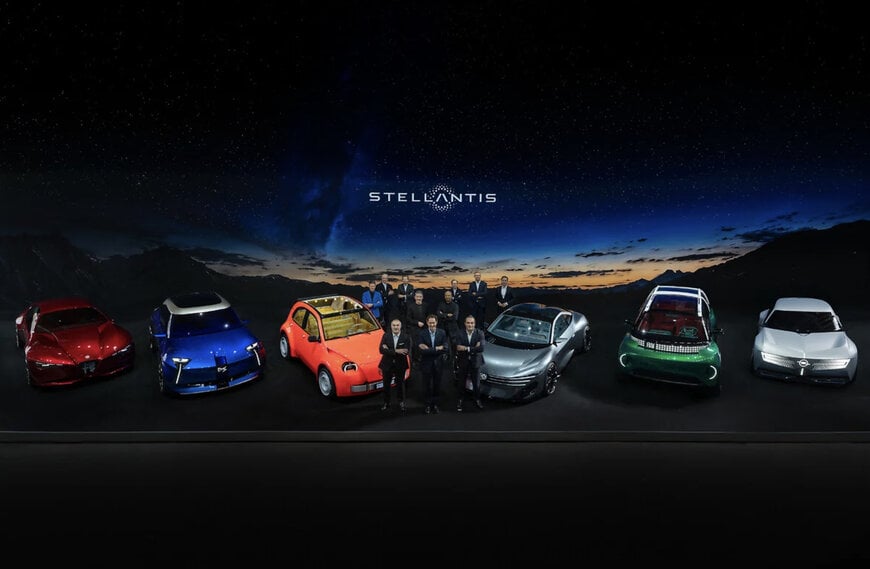
Automotive original equipment manufacturers face the complex engineering challenge of balancing aggressive vehicle electrification mandates with fluctuating regional consumer demand and diverse vehicle use cases. To address this technological transition across multiple market segments, Stellantis revealed six world-premiere concept vehicles representing Alfa Romeo, Citroën, DS Automobiles, FIAT, Opel, and PEUGEOT during an exclusive event at Hangar Y in Paris, previewing its broader showcase at the Paris Motor Show scheduled for October 12 to 18, 2026.
Execution of Multi-Brand Platform Architectures under FaSTLAne 2030
The automotive sector is moving away from single-powertrain chassis toward multi-energy architectures capable of integrating internal combustion, hybrid, and battery-electric drivetrains within uniform assembly lines. Developing separate architectures for distinct brands incurs redundant capital expenditures, whereas highly modular platforms allow shared structural engineering while preserving distinct brand identities and driving dynamics.
Stellantis outlined how these design studies advance its overarching FaSTLAne 2030 strategic framework, which targets the launch of more than 50 products by 2030 and aims to expand the company's market coverage across Enlarged Europe by 25 percent. At the Paris Motor Show exhibition, Stellantis prepared a display comprising eight operating brands, including strategic partner Leapmotor, with over 60 vehicles, nine total concept cars, and six premieres across the event's largest manufacturer booth.
Engineering Solutions across High-Performance and Mass-Market Segments
The unveiled concepts illustrate distinct engineering strategies, spanning lightweight hybrid sports sedans, steer-by-wire electric coupes, and cost-optimized urban battery-electric vehicles:
- High-Performance Hybrid Powertrain Integration: The Alfa Romeo Cuorerosso concept explores high-output packaging on a multi-energy platform within an overall vehicle length of up to 4.7 meters, a footprint optimized for D-segment vehicle dynamics. The proposed mechanical layout pairs a 2.9-liter twin-turbocharged V6 combustion engine with a full-hybrid electrification system. Drivetrain power is routed through a torque-converter automatic transmission, a lightweight carbon-fiber driveshaft, and an active Q4 all-wheel-drive system, engineering a blueprint suitable for high-performance Quadrifoglio variants.
- Cost-Constrained Urban Electrification: Addressing production cost barriers that hinder widespread electric vehicle adoption, the Citroën 2 CV Concept demonstrates an entry-level urban mobility platform engineered for European manufacturing. Designed with structural simplicity and material efficiency, the concept targets a base retail price of 15,000 euros without relying on overseas assembly hubs.
- Configurable Multi-Use Body Structures: The FIAT Multiplay challenges traditional segment classifications by merging pickup utility with sport-utility vehicle packaging. Built around an adaptable, configurable interior architecture inspired by the production legacy of the Multipla, the concept explores modular passenger-to-cargo conversion strategies for shared and multi-purpose mobility.
- Aerodynamic Estate Architecture and Luminescent Signatures: The Opel STX Concept explores estate body proportions through minimalist styling, a downward-sloping aerodynamic roofline, and an integrated lighting matrix. The vehicle incorporates the next-generation Opel Vizor front architecture with active lamella lighting animations and a vertical Opel Compass graphic signature intended for integration into future production passenger models.
- By-Wire Control and High-Density Human-Machine Interfaces: The PEUGEOT RCZ Vision serves as a performance technology demonstrator built on a platform architecture derived from the STLA One foundation. The vehicle eliminates conventional mechanical steering columns through steer-by-wire technology, linking electronic steering actuators to PEUGEOT's Hypersquare control interface and a redesigned i-Cockpit layout to improve cockpit packaging and driver ergonomics.
- Design-Led Luxury Customization: DS Automobiles introduced the DS F3VER concept, focusing on vehicle personalization, surface craftsmanship, and modular body tailoring to test luxury design cues for upcoming high-end electrified product lines.
Additional Context:
This section details technical specifications and competitive benchmarking not included in the original product announcement.
The technical configurations highlighted across the Stellantis prototypes align with industry benchmarks in digital vehicle dynamics and electric chassis architecture. Steer-by-wire systems, such as the mechanism deployed in the PEUGEOT RCZ Vision, operate by replacing mechanical steering racks and intermediate shafts with steering wheel angle sensors, electronic control units, and dual redundant rack actuators. This design allows variable steering ratios that range dynamically from direct low-speed maneuvering to high-speed stability while eliminating the intrusion risk of a mechanical steering column in forward-impact crash structures. Benchmark automotive implementations of production steer-by-wire systems include the steer-by-wire system on the Lexus RZ and the steer-by-wire steer system on the Tesla Cybertruck.
In the high-performance powertrain domain, the Alfa Romeo Cuorerosso concept's hybridized 2.9-liter V6 configuration represents an evolution of the all-aluminum, 90-degree twin-turbocharged V6 engine currently utilized in the Giulia and Stelvio Quadrifoglio models. In existing road applications, this combustion block produces 505 to 520 horsepower. Coupling this twin-turbo engine to a high-voltage hybrid traction motor matches comparable hybrid performance architectures, such as the 120-degree twin-turbo V6 plug-in hybrid drivetrain utilized in the Ferrari 296 GTB and the electrified performance systems engineered by Mercedes-AMG.
For urban electric vehicle manufacturing, Citroën's 15,000-euro target positions the 2 CV concept against entry-level A-segment electric vehicles in Europe, such as the Dacia Spring and the upcoming Renault Twingo E-Tech electric platform. Meeting this price threshold requires cost reductions in energy storage, driving the automotive industry toward lithium iron phosphate (LFP) cell chemistries or modular battery packs with capacities ranging between 25 kWh and 35 kWh to maintain vehicle curb weight below 1,200 kilograms.
Edited by Natania Lyngdoh, Induportals editor, with AI assistance.
www.stellantis.com
This section details technical specifications and competitive benchmarking not included in the original product announcement.
The technical configurations highlighted across the Stellantis prototypes align with industry benchmarks in digital vehicle dynamics and electric chassis architecture. Steer-by-wire systems, such as the mechanism deployed in the PEUGEOT RCZ Vision, operate by replacing mechanical steering racks and intermediate shafts with steering wheel angle sensors, electronic control units, and dual redundant rack actuators. This design allows variable steering ratios that range dynamically from direct low-speed maneuvering to high-speed stability while eliminating the intrusion risk of a mechanical steering column in forward-impact crash structures. Benchmark automotive implementations of production steer-by-wire systems include the steer-by-wire system on the Lexus RZ and the steer-by-wire steer system on the Tesla Cybertruck.
In the high-performance powertrain domain, the Alfa Romeo Cuorerosso concept's hybridized 2.9-liter V6 configuration represents an evolution of the all-aluminum, 90-degree twin-turbocharged V6 engine currently utilized in the Giulia and Stelvio Quadrifoglio models. In existing road applications, this combustion block produces 505 to 520 horsepower. Coupling this twin-turbo engine to a high-voltage hybrid traction motor matches comparable hybrid performance architectures, such as the 120-degree twin-turbo V6 plug-in hybrid drivetrain utilized in the Ferrari 296 GTB and the electrified performance systems engineered by Mercedes-AMG.
For urban electric vehicle manufacturing, Citroën's 15,000-euro target positions the 2 CV concept against entry-level A-segment electric vehicles in Europe, such as the Dacia Spring and the upcoming Renault Twingo E-Tech electric platform. Meeting this price threshold requires cost reductions in energy storage, driving the automotive industry toward lithium iron phosphate (LFP) cell chemistries or modular battery packs with capacities ranging between 25 kWh and 35 kWh to maintain vehicle curb weight below 1,200 kilograms.
Edited by Natania Lyngdoh, Induportals editor, with AI assistance.
www.stellantis.com
