
www.auto-innovations.net
10
'26
Written on Modified on
BASF Develops Circular Dismantling Seats for Kia EV3 Study Car
Hyundai Motor Group, Alten Korea, and BASF collaborate to introduce circular materials and design-for-disassembly principles into the new Kia EV3 Study Car interior seating architecture.
www.basf.com
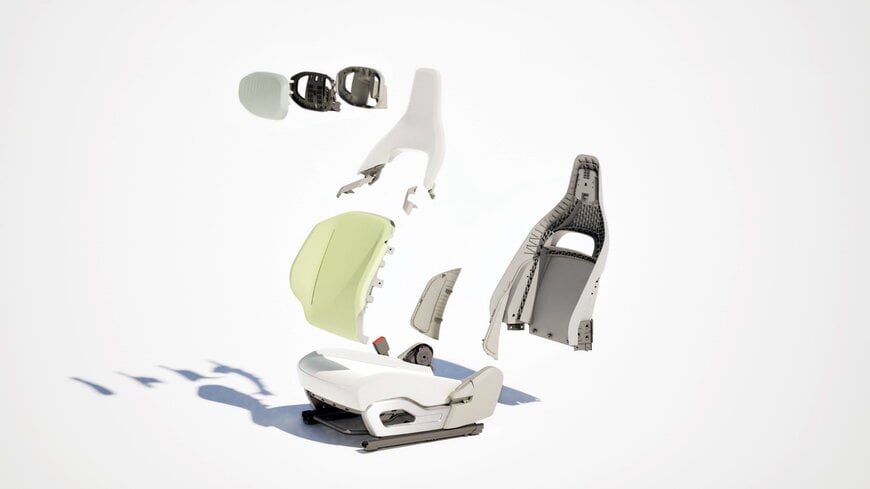
Automotive interior components present persistent challenges for material recovery because conventional seating bonds incompatible polymers, foams, and metals into complex multi-material assemblies. Addressing this operational challenge within the automotive data ecosystem and sustainable manufacturing requires engineering interior components for efficient end-of-life material separation without compromising mechanical integrity or passenger comfort.
Engineering Challenges in Interior System Disassembly
Automotive seats operate as complex mechanical systems subject to rigorous crashworthiness, durability, and ergonomic requirements. Traditional seat manufacturing combines steel frameworks, molded polyurethane cushioning, adhesives, and composite upholstery. Because these disparate material classes are glued, clipped, and mechanically fastened together permanently, disassembling them at a vehicle's end of life requires significant manual labor and often results in cross-contaminated material streams that downcycle or head to landfills.
Implementing design-for-disassembly principles within a digital supply chain requires engineers to evaluate the structural interfaces between polymers, foams, and structural backings during initial CAD and component modeling phases rather than treating recycling as a post-production aftermarket concern.
Architecture and Material Selection in Study Car 2.0
Developed jointly by vehicle manufacturer Hyundai Motor Company-Kia, engineering services provider Alten Korea, and chemical producer BASF, the concept seat integrates specialized polymer formulations to simplify dismantling and sorting workflows. Alten Korea engineered the seating architecture to balance structural stiffness, production assembly cycle times, and automated or rapid manual disassembly paths.
The seat architecture organizes polymer classes across functional layers:
Headrest: Formed using Elastollan thermoplastic polyurethane derived partly from bio-based feedstock. The processing utilizes the Whistling supercritical foaming technology patented by Comtech Chemical to achieve cushioning properties without conventional chemical blowing agents.
Cushioning and Backrest: Molded with Elastoflex W flexible polyurethane foam, formulated using recycled content derived from post-consumer feedstock to maintain dynamic load support.
Upholstery: Manufactured from Haptex polyurethane synthetic leather, which incorporates bio-circular feedstock to eliminate wet-processing organic solvents and provide durable surface contact.
Structural Back Cover and Frame: Utilizes Ultramid CR RC4 polyamide containing recycled content from post-consumer waste. The structural properties of the polyamide enable replacement of the conventional stamped-metal seat back frame with an injection-molded polymer structure that integrates directly into the rear cover.
System Integration and Dismantling Strategy
By replacing multi-piece steel backings with structural Ultramid polyamide and matching surface polyurethanes across the foam and trim, the design reduces the sheer variety of mixed materials. This alignment limits cross-contamination during shredding or disassembly.
"Study Car 2.0 gives us a practical environment in which to examine end-of-life considerations during vehicle and component development, rather than after the design has been completed," said Jongkook Lee, Vice President, Hyundai Motor Group. "This seat project helps us assess how material selection, assembly methods and future dismantling requirements interact within a complex interior system."
"A seat is a tightly integrated system, so changing how its components are separated also affects its structure, assembly and appearance," said Gwanghyun Kim, Executive Director at Alten Korea. "We therefore approached the seat as a complete system, balancing structural, assembly and separation requirements within one integrated design."
"Automotive seats require different material classes to work together within a single system," said Andy Postlethwaite, Senior Vice President, BASF Performance Materials Asia Pacific. "This co-creation allows us to examine the interfaces among PA, PU and TPU materials, including how material decisions relate to component construction and separation at the vehicle’s end of life."
Development Context
Study Car 2.0 builds on previous concept vehicle material programs between Hyundai Motor Group and BASF, including the Hyundai i-flow concept in 2010, the high-performance Hyundai RN30 in 2016, and the initial Kia EV3 Study Car in 2024. The current iteration uses the production Kia EV3 platform to test disassembly parameters on production-intent vehicle architectures.
Additional Context
This section details technical specifications and competitive benchmarking not included in the original product announcement.
The push toward design-for-disassembly in vehicle seating is driven by European Union End-of-Life Vehicles (ELV) regulatory revisions, which mandate minimum post-consumer recycled plastic targets in new vehicles and strict material recovery quotas. Conventional vehicle seats represent roughly 40 to 60 kilograms of vehicle weight, yet less than 10 percent of that plastic mass is typically recovered into closed-loop automotive supply streams.
Comparable engineering initiatives across the automotive sector include mono-material seating concepts tested by Tier 1 suppliers such as Forvia and Adient. Those architectures frequently explore 100 percent polyethylene terephthalate (PET) constructions across cover, foam, and frame to create pure mono-material recycling streams. In contrast, the Hyundai-Kia, Alten Korea, and BASF platform retains high-resilience polyurethane chemistries and engineering polyamides, relying on cleanly separable material interfaces rather than a single polymer family. This modular multi-polymer strategy preserves established OEM comfort and vibration-damping specifications while meeting structural rigidity benchmarks under standard FMVSS and ECE crash test loads.
Edited by Evgeny Churilov, Induportals Media - Adapted by AI.
www.basf.com
