www.auto-innovations.net
13
'24
Written on Modified on
ZF AND INFINEON USE AI ALGORITHMS TO OPTIMIZE SOFTWARE AND CONTROL UNITS FOR DRIVING DYNAMICS
The ZF Group and Infineon Technologies AG have jointly developed and implemented AI algorithms for the development and control of vehicle software as part of the EEmotion project.
www.zf.com
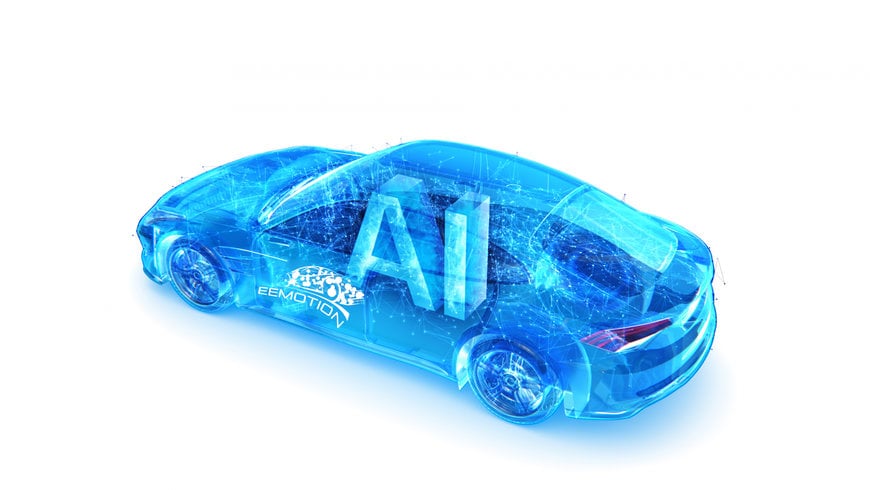
Trucks automatically driving behind one another on the highway, 'platooning', or cars automatically changing lanes: Here vehicle movements have to be calculated and executed precisely and quickly without a human driver. Software and AI algorithms safely control the drive, brakes, front and rear wheel steering and damping systems. The more efficient the AI algorithms are, the better the available computing power can be used.
The ZF Group and Infineon Technologies AG have jointly developed and implemented AI algorithms for the development and control of vehicle software as part of the EEmotion project. The project was co-funded by the German Federal Ministry for Economic Affairs and Climate Action. The AI algorithms developed in the project, proven in a test vehicle, control and optimize all actuators during automated driving according to the specified driving trajectory.
ZF has added AI algorithms to its two existing software solutions cubiX and Eco Control 4 ACC, which have been implemented on Infineon’s AURIXTM TC4x microcontroller (MCU) with integrated Parallel Processing Unit (PPU). The result: More efficient artificial intelligence algorithms and better utilization of computing power. This in turn leads to better driving performance and increased driving safety. Compared to conventional approaches without AI, the two companies have now proven that their solution can for example carry out automated lane changes much more accurately. The energy efficiency of driver assistance systems such as Adaptive Cruise Control has also been increased. The improved driving performance combined with lower computing power demands paves the way for cost-efficient Level 2+ assistance systems.
Software-based chassis control optimized with AI
ZF's cubiX software makes it possible to control all chassis components in passenger cars and commercial vehicles. This includes longitudinal and lateral dynamics as well as the vehicle's vertical dynamics. In addition, the Eco Control 4 ACC predictive cruise control system is being further developed using a computationally intensive optimization algorithm and model-predictive control to achieve as much as 8 percent more range under real driving conditions. The EEmotion project has also developed AI algorithms which are applied as early as during the development phase. This allows more efficient design of vehicle software which can then be made available to customers more quickly. The accelerated and AI-supported application of vehicle software offers vehicle manufacturers clear advantages when adapting to different vehicle models.
Microcontroller from Infineon enables use of AI algorithms
Lean, AI-based algorithms require a lot of computing power, which makes it advisable to integrate them into high-performance microcontrollers such as the AURIX TC4x. Infineon's AURIX TC4x microcontrollers offer high real-time and implement the latest trends in AI modelling, virtualization, functional safety, cybersecurity and networking functions. They pave the way for new E/E architectures and the next generation of Software-Defined Vehicles (SDV). An important part of the AURIX TC4x is the Parallel Processing Unit, which supports powerful AI applications thanks to fast and parallel data processing.
About the EEmotion project
The EEmotion project's objective was to develop an AI algorithm-based control system for automated driving that ensures more precise trajectory control in various driving situations. The implementation of the project included the definition of the requirements for the AI-based functions, the development of an overall concept and corresponding hardware as well as developing the integration of AI in control architectures for safety-critical applications. It also took aspects such as the development of secure AI-monitored communication and the investigation of the simulative development and validation of vehicle dynamics systems into account. Infineon Technologies AG acted as the consortium coordinator for the project, with a total volume of 10.4 million euros, 59 percent of which was funded by the German Federal Ministry for Economic Affairs and Climate Action. The project ran from September 2021 to August 2024 and included partnerships with ZF Friedrichshafen AG, b-plus technologies GmbH, samoconsult GmbH, RWTH Aachen University and the Universität zu Lübeck.