
www.auto-innovations.net
16
'26
Written on Modified on
Translucent Polypropylene Stabilizers for Automotive Durability
Syensqo introduces stabilizer solutions to improve UV and thermal resistance of translucent polypropylene, supporting its broader use in automotive interior and exterior components.
www.syensqo.com
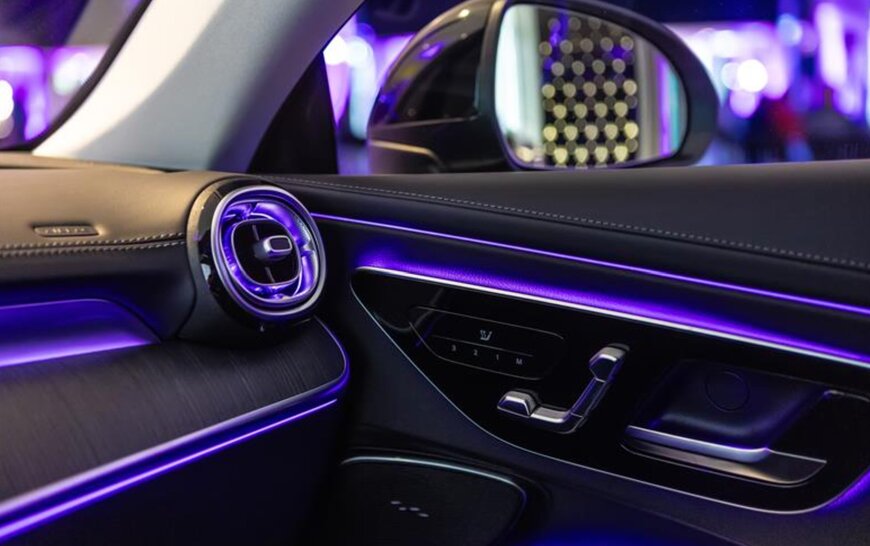
Translucent polypropylene (PP) is gaining attention in automotive engineering for enabling light-transmitting surfaces and refined finishes, particularly in interior trims and exterior elements. However, its susceptibility to ultraviolet (UV) radiation and thermal degradation has limited deployment in long-life applications. In this context, Syensqo has introduced the CYASORB® CYXTRA® V9800 and V9100 stabilizer series to improve durability and optical stability in automotive-grade PP.
Extending PP use in automotive interiors and exteriors
The use of translucent PP aligns with evolving automotive design trends that integrate lighting, surface clarity, and visual depth into functional components such as trim panels, lighting diffusers, and bumpers. These applications require materials that can maintain optical and mechanical properties under prolonged exposure to sunlight and elevated temperatures.
The CYASORB® CYXTRA® stabilizers are designed to address these constraints by mitigating degradation mechanisms associated with UV exposure and thermal aging. This expands the feasible use of PP in both interior and exterior automotive environments, where performance requirements differ significantly.
Targeted stabilization for application-specific demands
The CYASORB® CYXTRA® series differentiates between environmental stress conditions:
- CYASORB® CYXTRA® V9800 is formulated for exterior automotive components, such as bumpers, where UV exposure is a dominant degradation factor. The stabilizer enhances resistance to photodegradation, helping maintain structural integrity and surface appearance.
- CYASORB® CYXTRA® V9100 is tailored for interior applications, where elevated temperatures and long-term thermal aging are more critical than direct UV exposure. It supports stability in enclosed environments, such as dashboards and cabin elements.
This separation reflects the need for application-specific additive strategies in automotive polymer systems, particularly when balancing optical clarity with durability.
Optical and mechanical performance under long-term exposure
The stabilizer series is engineered to preserve key optical properties of translucent PP over its service life. This includes minimizing yellowing, quantified through a low contribution to the yellowness index, and maintaining light transmittance with limited haze formation. These characteristics are critical for components used in ambient lighting systems and semi-transparent panels.
In addition to optical stability, the additives help retain gloss and prevent surface defects such as blooming under combined light and heat exposure. Mechanical property retention is also addressed, supporting consistent performance in load-bearing or impact-prone components.
Implications for automotive material systems
By addressing both UV-induced and thermally driven degradation pathways, the CYASORB® CYXTRA® V9800 and V9100 stabilizers enable broader adoption of translucent PP in the automotive materials ecosystem. This contributes to the development of advanced automotive materials that combine functional durability with design flexibility, particularly in applications where visual quality and long-term performance must coexist.
Edited by Aishwarya Mambet, Induportals Editor, with AI assistance.
www.syensqo.com
Optical and mechanical performance under long-term exposure
The stabilizer series is engineered to preserve key optical properties of translucent PP over its service life. This includes minimizing yellowing, quantified through a low contribution to the yellowness index, and maintaining light transmittance with limited haze formation. These characteristics are critical for components used in ambient lighting systems and semi-transparent panels.
In addition to optical stability, the additives help retain gloss and prevent surface defects such as blooming under combined light and heat exposure. Mechanical property retention is also addressed, supporting consistent performance in load-bearing or impact-prone components.
Implications for automotive material systems
By addressing both UV-induced and thermally driven degradation pathways, the CYASORB® CYXTRA® V9800 and V9100 stabilizers enable broader adoption of translucent PP in the automotive materials ecosystem. This contributes to the development of advanced automotive materials that combine functional durability with design flexibility, particularly in applications where visual quality and long-term performance must coexist.
Edited by Aishwarya Mambet, Induportals Editor, with AI assistance.
www.syensqo.com
