
Multiparameter Sensor Architecture for High-Voltage Battery Safety Systems
Marquardt has developed a sensor network that correlates physical, thermal, and electrochemical data to monitor high-voltage battery conditions across automotive and industrial applications.
www.marquardt.com
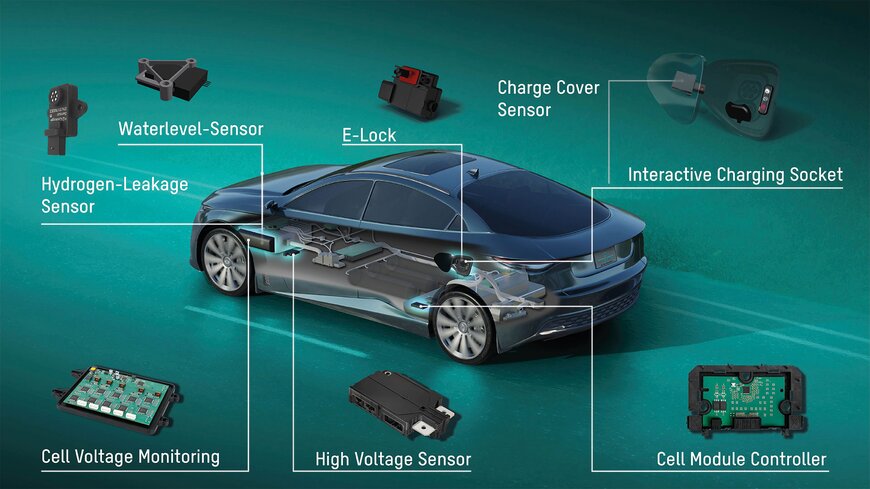
Mechatronics manufacturer Marquardt presented an expanded portfolio of battery system monitoring technologies at the Battery Show Europe in Stuttgart, Germany. The architecture focuses on a newly developed safety sensor designed to monitor internal physical processes within high-voltage battery packs. The system targets electric vehicles, commercial transport, and stationary energy storage networks, where continuous monitoring and early fault detection are required to prevent thermal propagation and electrical failures.
Multiparameter Data Correlation and Early Detection
Conventional battery monitoring often relies on isolated metrics such as individual cell voltage or external temperature. The sensor architecture developed by Marquardt integrates multiple measurement principles into a single diagnostic unit. The sensor continuously captures mechanical impact severity, pressure variations indicative of cell venting, thermal deviations, and the presence of gases generated during electrochemical reactions. By correlating these physical parameters in real time, the system identifies operational anomalies before they escalate into critical events like thermal runaway. Dr. Patrick Mattes, Vice President of the Power and Energy Solutions business unit at Marquardt, stated that linking and interpreting these combined data streams allows for earlier risk identification compared to analyzing isolated parameters.
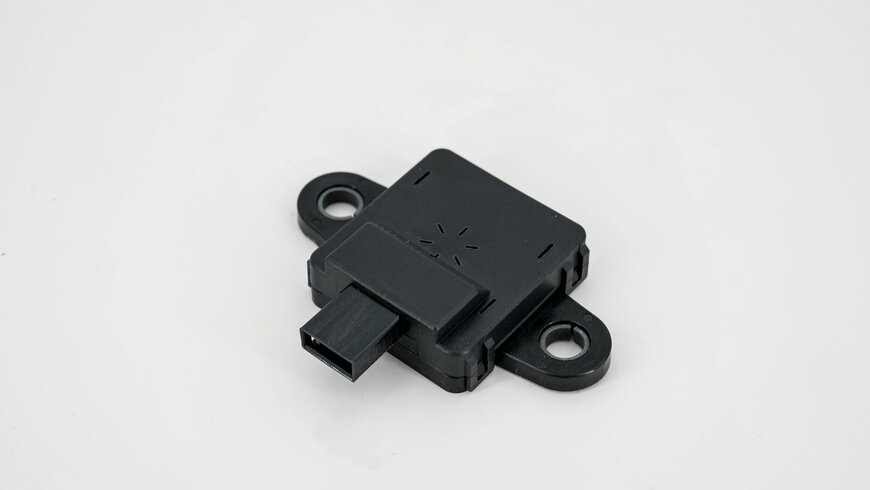
The new Battery Safety Sensor from Marquardt enables comprehensive monitoring of physical processes within the battery and sets new standards for the early detection of critical conditions.
Integrated System Architecture and Component Functionality
The safety sensor operates within a broader system-level architecture where sensing, electrical control, and energy management interact. Within this framework, the battery management system processes the integrated sensor data alongside operational states, including state of charge and state of health. A Cell Module Controller supplies granular data at the individual cell level, while an overarching high-voltage sensor monitors the electrical integrity of the pack. This high-voltage sensor continuously measures current, voltage, and insulation resistance to detect leakage currents or insulation breakdown at an early stage.
Energy Management and Mechanical Safety Integration
The system architecture also integrates operational components like the onboard charger and the electromechanical locking mechanism. The onboard charger regulates energy input, influencing the thermal conditions and overall efficiency of the charging cycle. Concurrently, the electromechanical lock functions as a mechanical safeguard, maintaining secure connections during high-voltage charging and preventing disconnection under electrical load. This delineation of component roles—from primary physical process detection to electrical monitoring and mechanical safety—provides a transparent diagnostic overview of the entire battery architecture, ensuring predictable system behavior under operational stress.
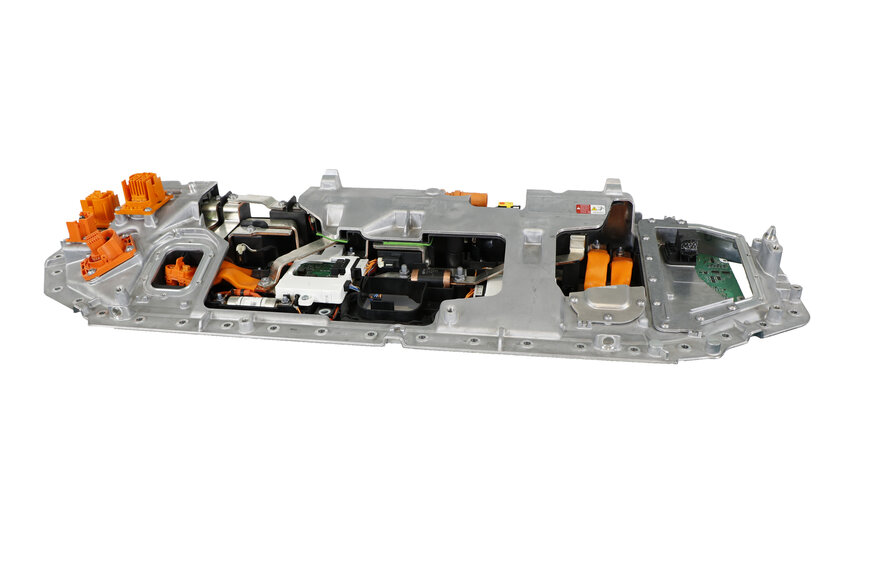
By developing and manufacturing battery management systems and their components, Marquardt provides the core technology for electrically powered vehicles.
Additional Context: This section details technical specifications and competitive benchmarking not included in the original product announcement.
In the field of early thermal runaway detection for high-voltage batteries, multiparameter sensors are increasingly replacing single-metric temperature or voltage sensors. Competitive solutions from manufacturers such as Metis Engineering or Sensata Technologies utilize CAN-bus integrated sensors that monitor volatile organic compounds, absolute pressure, and hydrogen concentrations. A key benchmark in this sector is the response time to venting events, where pressure spikes and gas emissions precede measurable temperature increases. By integrating mechanical shock detection alongside gas and pressure monitoring, the Marquardt system provides an additional layer of mechanical fault analysis, allowing the battery management system to differentiate between standard off-gassing and collision-induced cell rupture.
Edited by an industrial journalist, Lekshman Ramdas, with AI assistance.
www.marquardt.com
