
www.auto-innovations.net
18
'26
Written on Modified on
Operational evaluation of renewable fuels for fleets
BMW Group, Toyota Motor Europe, Repsol and Bosch collaborate to test renewable fuels and digital infrastructure in existing vehicles.
www.bmw.com
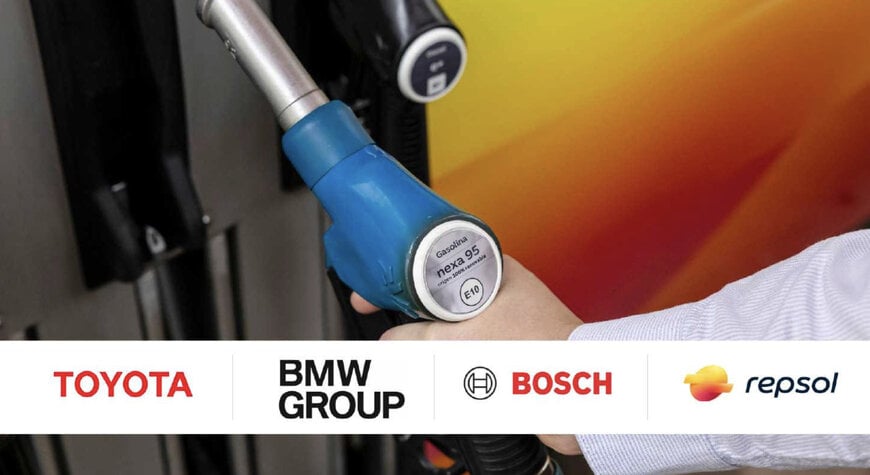
The consortium formed by companies in the automotive and energy sectors evaluates the integration of one hundred percent renewable fuels in operational vehicle fleets under real conditions. The technical initiative combines the distribution of gasoline compatible with current combustion engines and the deployment of a digital infrastructure for consumption tracking in the mobility industry. The project addresses the technical challenge of decarbonization in road transport by operating on the current network. The complexity of the system required technological cooperation to integrate the automotive engineering of BMW Group and Toyota Motor Europe with the refining and distribution capacity of Repsol, along with the software architecture of Bosch. The purpose is to obtain operational metrics on the use of vehicles powered exclusively by eligible fuels, mitigating greenhouse gas emissions without the need for engine hardware modifications or new infrastructural investments.
Solution architecture and responsibilities
The operational core of the solution employs Repsol Nexa 95 renewable gasoline, synthesized from raw materials that comply with the Renewable Energy Directive. To ensure traceability, Bosch implements the Digital Fuel Twin system, a software platform that captures and validates data from vehicle telemetry, service station records, and refueling transactions. Simultaneously, BMW Group and Toyota Motor Europe provide the vehicle units for field testing and facilitate the extraction of operational parameters. This technological ecosystem digitally certifies fuel use throughout the entire value chain.
Implementation and operational validation
The deployment of the pilot phase, initiated in July 2026 in Spain, covers a fleet of approximately twenty vehicles and will run for six months. The operational execution utilizes the public fuel distribution network managed by Repsol. In this environment, the digital tracking system is integrated to audit refueling transactions in real time, establishing a direct and verifiable link between the physical fluid supply and the individual consumption of each unit in the fleet.
Industrial applications and operational parameters
The direct application of this architecture focuses on commercial fleet management and automotive production, demonstrating that renewable fuels offer an immediate and scalable solution for emission reduction. Technical use cases encompass the efficiency monitoring in traditional powertrains and hybrid systems, as well as the calibration of digital tracking tools under real driving conditions. The consolidation of these technologies guarantees the stability of the energy supply process and offers a mechanism to certify regulatory compliance in the use of low-emission vectors.
Quantifiable impact on infrastructure
The project generates exact metrics that support the validation of monitoring systems and guarantee the scalability of physical refueling tracking. The exclusive use of fuels validated under sustainability criteria provides a measurable reduction in greenhouse gases calculated over the complete life cycle compared to fossil fuels. The obtained operational records establish a technical baseline to evaluate the efficiency of propulsion systems powered by renewable alternatives, supporting the development of objective parameters for future regulatory frameworks in the European automotive sector.
Edited by Maria Brueva, Induportals editor – adapted by AI.
www.bmwgroup.com
