
www.auto-innovations.net
11
'26
Written on Modified on
rFpro and Solectrix Partner on Virtual Camera Development
The integration of SXIVE technology into the AV elevate platform enables full camera pipeline simulation for ADAS development.
rfpro.com
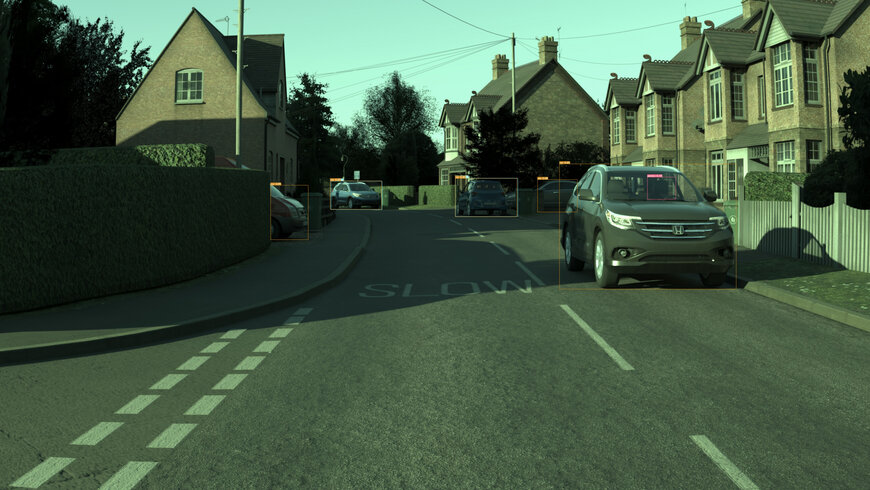
A camera with unbalanced channel configurations simulates real-world sensor configurations and artifacts from internal processes, such as demosaicing.
rFpro has partnered with Solectrix to integrate the SXIVE (Simplified eXtensive Image and Video Engine) image-processing technology into its AV elevate™ platform. This collaboration allows automotive engineers to design, model, and optimize the entire camera pipeline in a fully virtual simulation environment. By shifting sensor optimization and training dataset production to earlier stages in the development cycle, Tier 1 suppliers can now meet growing OEM demands to deliver accurate digital twins of camera systems long before physical hardware is manufactured.
The integration embeds Solectrix’s software-based Image Signal Processing (ISP) directly into rFpro’s camera model. This enables developers to adjust critical processing parameters—such as debayering, tone mapping, color correction, and lens distortion—against highly variable simulated edge cases. Beyond autonomous driving and Advanced Driver Assistance Systems (ADAS) perception models, the virtual environment also supports human vision applications like digital mirrors and surround-view systems, significantly reducing the costs and physical risks associated with real-world road testing.
Additional Context
This section provides technical and market background not explicitly detailed in the original release.
In the development of autonomous vehicles, there is a fundamental difference between tuning a camera for a human display and tuning it for machine vision. Machine learning algorithms often require specific image characteristics—prioritizing raw data fidelity over aesthetic color balancing—to accurately identify objects like pedestrians in challenging lighting conditions. Traditionally, tuning the ISP required waiting for physical camera prototypes and conducting expensive, time-consuming data collection drives on public roads. By utilizing high-fidelity synthetic data and creating a digital twin of the camera sensor, developers can adopt a "shift-left" methodology. This approach allows perception software to be trained and validated concurrently with hardware design, drastically reducing time-to-market while safely testing dangerous edge cases that are difficult to replicate in the real world.
Edited by Lekshman Ramdas, Induportals editor – adapted by AI.
www.rfpro.com
rFpro has partnered with Solectrix to integrate the SXIVE (Simplified eXtensive Image and Video Engine) image-processing technology into its AV elevate™ platform. This collaboration allows automotive engineers to design, model, and optimize the entire camera pipeline in a fully virtual simulation environment. By shifting sensor optimization and training dataset production to earlier stages in the development cycle, Tier 1 suppliers can now meet growing OEM demands to deliver accurate digital twins of camera systems long before physical hardware is manufactured.
The integration embeds Solectrix’s software-based Image Signal Processing (ISP) directly into rFpro’s camera model. This enables developers to adjust critical processing parameters—such as debayering, tone mapping, color correction, and lens distortion—against highly variable simulated edge cases. Beyond autonomous driving and Advanced Driver Assistance Systems (ADAS) perception models, the virtual environment also supports human vision applications like digital mirrors and surround-view systems, significantly reducing the costs and physical risks associated with real-world road testing.
Additional Context
This section provides technical and market background not explicitly detailed in the original release.
In the development of autonomous vehicles, there is a fundamental difference between tuning a camera for a human display and tuning it for machine vision. Machine learning algorithms often require specific image characteristics—prioritizing raw data fidelity over aesthetic color balancing—to accurately identify objects like pedestrians in challenging lighting conditions. Traditionally, tuning the ISP required waiting for physical camera prototypes and conducting expensive, time-consuming data collection drives on public roads. By utilizing high-fidelity synthetic data and creating a digital twin of the camera sensor, developers can adopt a "shift-left" methodology. This approach allows perception software to be trained and validated concurrently with hardware design, drastically reducing time-to-market while safely testing dangerous edge cases that are difficult to replicate in the real world.
Edited by Lekshman Ramdas, Induportals editor – adapted by AI.
www.rfpro.com
