
www.auto-innovations.net
30
'25
Written on Modified on
Battery aging management in electric sports cars
Porsche AG applies cell chemistry, thermal control, and data-driven battery management to slow capacity loss, enable fast charging, and ensure long-term safety in high-performance electric vehicles.
www.porsche.com
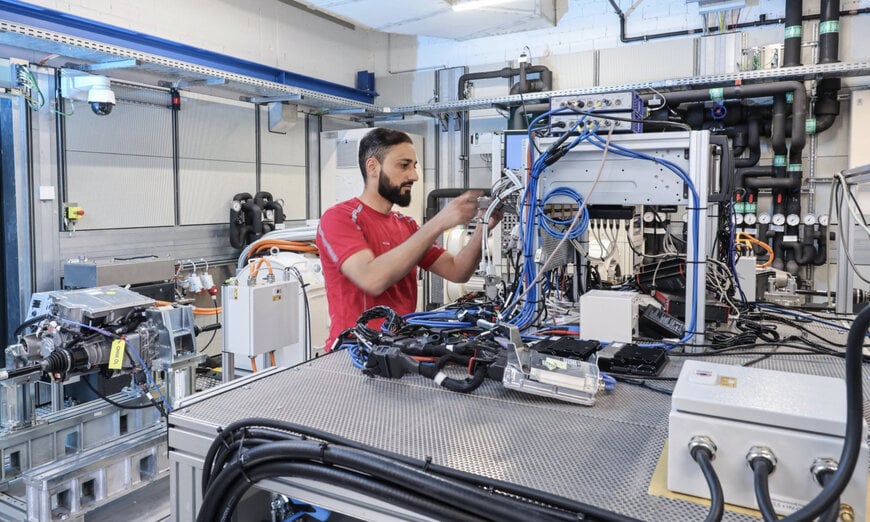
Porsche AG has developed a comprehensive battery aging and fast-charging strategy that combines cell design, thermal management, and intelligent control algorithms to balance performance, charging speed, safety, and long-term durability in its electric vehicles.
Understanding early battery aging
Lithium-ion batteries undergo unavoidable aging, particularly during the first months of operation. In the initial two to twelve months, a cell typically loses between one and five percent of its capacity, a phenomenon known as the “initial drop.” Porsche accounts for this effect during production by calibrating the usable energy content of new batteries accordingly. As a result, the effective state of health (SoH) declines more gradually over the vehicle’s lifetime.
Key parameters influencing aging include temperature, state of charge, aging condition, and charging current. Porsche has identified operating temperatures below 30 °C and charge levels below 90 percent during extended parking periods as optimal conditions for minimizing degradation.
Cell-level processes and charging behavior
Within each battery cell, electrochemical and mechanical processes directly affect aging. During charging, lithium ions migrate from the cathode to the anode and cause the anode particles to expand; during discharging, the process reverses and the particles contract. Electrical resistance increases as the state of charge rises and decreases as the battery discharges.
Fast charging intensifies these effects. Introducing lithium into the anode at high rates can lead to lithium plating, where metallic lithium deposits on the anode surface instead of being stored reversibly. This lithium is no longer available for energy storage and contributes to permanent capacity loss. In addition, repeated mechanical stress can crack electrode particles, further reducing usable lithium.
Intelligent battery management and testing
To mitigate these mechanisms, Porsche relies on robust cell chemistry combined with intelligent battery management. Control algorithms are informed by real customer usage patterns. While customers use fast charging in roughly 15 percent of charging events, Porsche stress tests simulate fast charging in up to 50 percent of all cycles to ensure long-term robustness.
Lifetime validation includes simulations of varying ambient temperatures, dynamic driving behavior, and extreme thermal exposure up to 60–100 °C. Battery systems are tested over simulated distances between 160,000 and 300,000 kilometers to evaluate performance and aging under demanding conditions.
Fast charging, performance, and thermal optimization
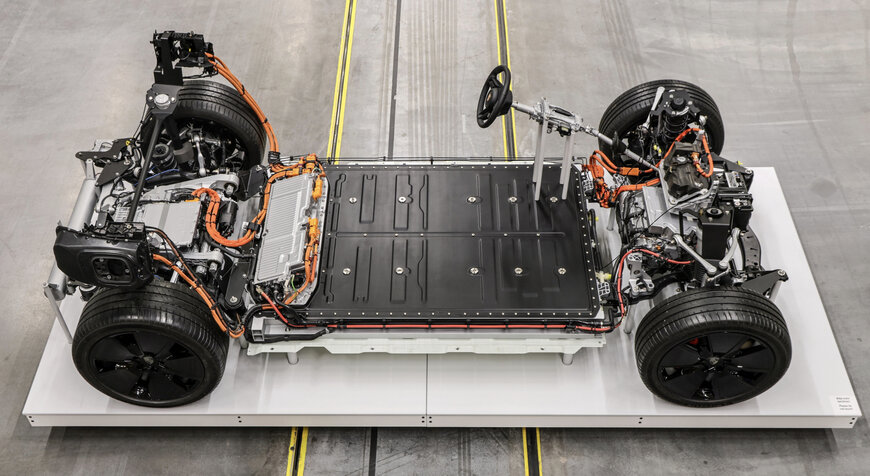
In current-generation electric models, these development efforts have enabled tangible improvements. Enhanced cell designs reduce internal resistance while increasing performance. Passive cooling integrated into the cell modules and upgraded cooling plates with higher heat dissipation capacity improve thermal stability under high loads. Electrical connections have been redesigned to support higher currents.
As a result, fast-charging times from 10 to 80 percent state of charge have been reduced, despite increased battery capacity. Charging power has increased significantly, and the minimum temperature required to initiate fast charging has been lowered, improving usability in cooler environments.
Higher discharge currents also support improved driving dynamics by enabling faster and more powerful acceleration. At the same time, weight optimization of the battery system contributes to overall vehicle handling.
Safety and structural integration
High-voltage battery safety remains a core design priority. Battery systems undergo immersion tests, corrosion exposure, and severe crash simulations. In the event of a collision, sensors detect critical loads at an early stage. Electric motors and auxiliary systems are automatically disconnected from the battery, and residual energy is safely discharged to prevent electric shock.
Component-level tests subject battery modules to loads exceeding those expected in real-world crashes, with strict requirements that no fire may occur. Structural optimization and protective placement of high-voltage components ensure that battery deformation remains minimal even under severe impact scenarios.
Technical positioning
Porsche’s battery strategy demonstrates how performance-oriented electric vehicles can combine fast charging, high power output, and long service life. By integrating cell research, thermal design, software-based control, and extensive validation, the company addresses battery aging not as a single constraint but as a system-level engineering challenge across the entire vehicle lifecycle.
www.porsche.com
