
www.auto-innovations.net
08
'26
Written on Modified on
Artificial intelligence for battery cell production
BMW Group and the University of Zagreb are developing AI models to optimise battery cell production, testing and recycling.
www.bmw.com
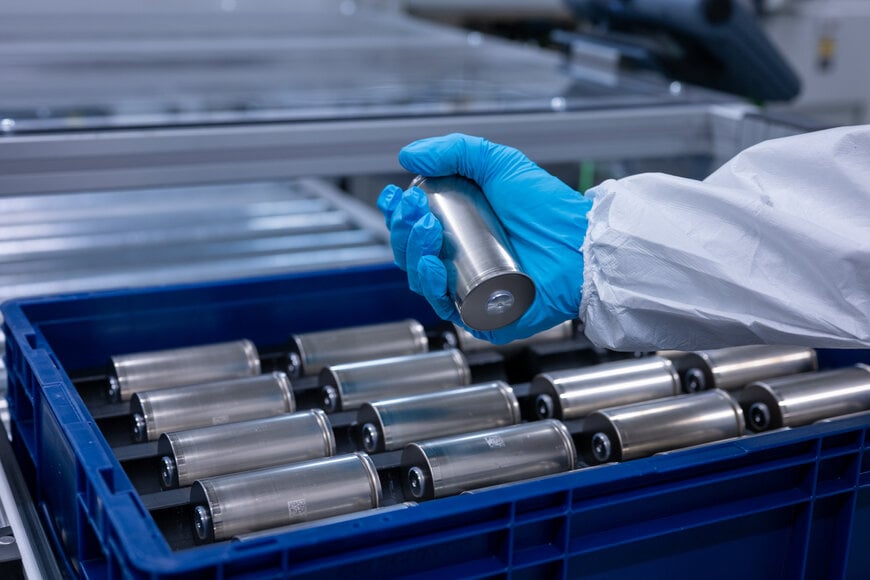
BMW Group and the Regional Centre of Excellence for Robotic Technology at the University of Zagreb are collaborating on the development of artificial intelligence-based solutions for battery cell production. The “Insight” research project applies predictive models and data analysis to improve efficiency, quality and resource management in high-voltage battery manufacturing processes.
Context of the cooperation
The collaboration involves BMW Group, active in the development and production of battery systems, and the University of Zagreb, specialised in robotics, mechanical engineering, electronics and computer science. The cooperation, launched in 2024, focuses on integrating artificial intelligence models into industrial battery cell production.
The objective is to address the growing complexity of battery manufacturing processes, which require large volumes of data, extensive testing and continuous quality control throughout the entire value chain, from electrode production to direct recycling of materials.
Technical solution and responsibilities
The “Insight” project uses artificial intelligence networks trained with historical production data and real-time manufacturing data. The developed models enable the prediction of process parameters and battery cell performance, reducing the number of physical tests required.
BMW Group provides industrial infrastructure, production data and expertise in battery cell development. The University of Zagreb contributes research activities, data collection and structuring, and the development of AI models.
The developed solutions are applied at the Battery Cell Competence Centre in Munich, where research and development activities for future generations of high-voltage batteries are carried out.
Deployment and integration
The integration of AI systems takes place throughout the entire battery cell production chain. The models are used to optimise production parameters, verify quality and perform predictive performance analysis.
One application focuses on the “quarantine” phase of battery cells after the initial charging process. Through predictive analysis, the AI systems can evaluate cell behaviour in advance, potentially reducing the need for extended controlled storage periods.
BMW Group is also evaluating the expansion of the developed models to additional applications within its production network and among battery cell manufacturers.
Applications and use cases
Applications include optimisation of production testing, reduction of material consumption, improved quality control and support for direct battery recycling processes.
According to project data, the AI models reduce by more than 50% the time and material required in specific stages of the production process. The developed technologies also support production data management and the identification of operational patterns to improve process performance and stability.
Results and expected impact
The cooperation contributes to the development of more efficient production processes focused on optimised resource usage. Reducing physical testing and material consumption helps decrease operational time and industrial costs while maintaining high quality standards.
The collaboration also strengthens technology transfer between academic research and industry, supporting the development of specialised expertise in artificial intelligence and battery technologies.
Edited by Maria Brueva, Induportals editor – adapted by AI.
www.bmwgroup.com
