
www.auto-innovations.net
19
'26
Written on Modified on
Dual-speed electric rear axles optimize all-wheel-drive hybrid powertrain efficiency
Valeo has launched a dual-speed electric drive unit to eliminate conventional mechanical components and reduce fleet emissions for sport utility vehicles.
www.valeo.com
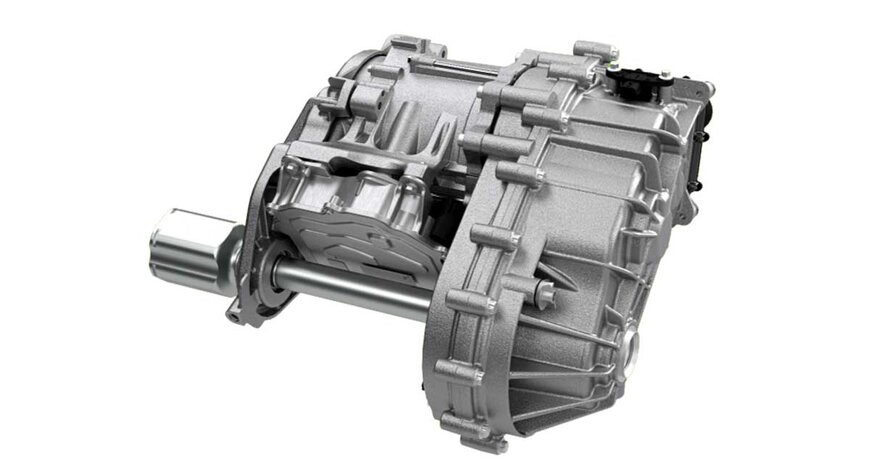
The commercial deployment of a 48-volt dual-speed electric axle addresses tightening European automotive fleet emissions mandates by replacing heavy mechanical all-wheel-drive configurations. This technical innovation implements an automated secondary electric drive unit directly into existing internal combustion and bi-fuel powertrain platforms.
Mechanical design and software-synchronized gear engagement
The system architecture integrates a 41-kilogram rear electric powertrain engineered to fit compact vehicle platform dimensions without requiring extensive structural chassis re-engineering. This modular layout delivers a peak output of 31 horsepower, allowing light mild-hybrid passenger vehicles to operate up to 60 percent of urban transit phases in a fully decoupled electric mode. By managing power distribution dynamically through a dedicated software framework, the configuration optimizes energy utilization at the drive layer.
To resolve the historical performance trade-off between low-speed torque requirements and high-speed electrical efficiency, the unit incorporates a dual-ratio transmission. Low-speed traction is managed via a short gear ratio that generates a maximum wheel torque of 1,800 Nm, providing necessary torque thresholds for steep inclines and off-road conditions.
For high-speed operation up to 140 km/h, the system transitions to a long gear ratio. This shifting sequence relies on a simplified mechanical dog clutch driven by software-synchronized speed engagement algorithms. This choice minimizes structural complexity and production costs relative to conventional multi-plate wet clutch assemblies.
Powertrain integration and thermal validation parameters
The electrical and mechanical sub-assemblies are configured to remain completely independent of the front-axle primary combustion engine, establishing a decentralized all-wheel-drive system. This separation removes the requirement for a longitudinal propeller shaft, mechanical transfer case, or physical central differential. This integration method yields direct structural weight reductions and lowers drivetrain friction losses.
The control unit maintains compatibility with alternative fuel configurations, including bi-fuel gasoline and liquefied petroleum gas engines. These system adjustments occur without altering baseline vehicle towing metrics or specified water-wading thresholds.
Thermal and mechanical durability validation involved testing regimens spanning an operating window from -30°C in sub-arctic testing zones to 45°C in high-temperature arid regions. This validation pattern ensures continuous torque delivery and precise slip control under extreme environmental fluctuations, safeguarding sub-component longevity and normalizing raw drivetrain telemetry for onboard diagnostic logging.
Additional Context: Technical specifications and competitive benchmarking
In the expanding landscape of low-voltage vehicle electrification, 48-volt electric axles provide a low-cost alternative to high-voltage architectures utilized by high-performance electric vehicles. This dual-speed 48-volt layout competes conceptually with modular mild-hybrid systems developed by tier-one suppliers such as Schaeffler and BorgWarner.
While BorgWarner has advanced its 48-volt torque management portfolio through electronic cross differentials to regulate lateral wheel slip, Valeo focuses on longitudinal tractive effort by combining a multi-speed reducer with a disconnect function directly on a single secondary axle.
Most conventional 48-volt secondary drives operate with a fixed gear ratio. These fixed configurations face clear physical boundaries, as they must disconnect or face extreme back-electromotive force and efficiency drop-offs when vehicle speeds exceed 110 km/h.
By implementing an active two-speed dog clutch mechanism, this architectural upgrade maintains full torque availability at low speeds via an 1,800 Nm ceiling while expanding the efficient operational envelope up to 140 km/h. However, this mechanical complexity introduces discrete software synchronization steps that require precise torque-interrupt management compared to seamless, single-speed layouts.
Edited by Sucithra Mani, Induportals editor – adapted by AI.
www.valeo.com
